
Caucasus is zone of Russia’s historical interests — Anatoly Matviychuk
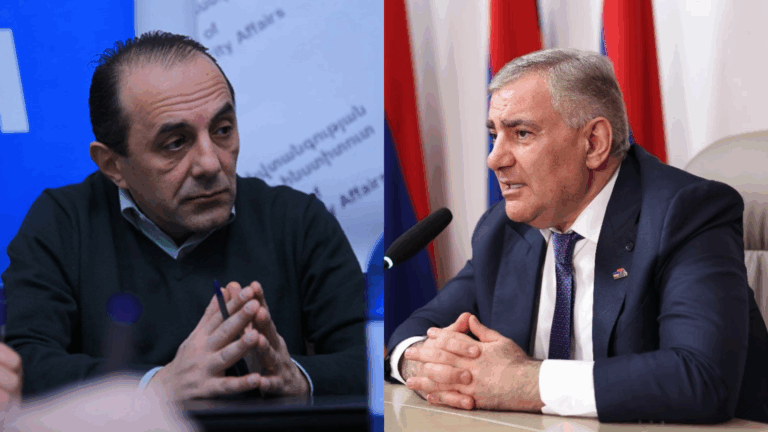
In an interview with Alpha News, Russian military observer Anatoly Matviychuk commented on Armenian-Azerbaijani relations, as well as Russia’s approaches to the South Caucasus region.
“Aliyev increasingly resembles a small dictator—a winner who decided that his victory in that 44-day war allows him to impose his terms on the Armenian side. Key issues remain unresolved, including the so-called ‘Zangezur corridor’, any border issues in general, and most importantly, the issue of Artsakh and the return of civilians to their historical homeland,” the expert said.
According to the military observer, Iran will not remain indifferent if Armenia’s borders are violated.
“We must understand that Iran’s actions are somewhat constrained by the economic and political sanctions imposed by the international community. After all, the question of Iran’s nuclear program looms large, and the country is wary of inviting further troubles beyond those it already faces. But the fact is that Turkey is very actively expanding its influence in the region that we are discussing today, Armenia and Azerbaijan. Turkey is trying to dominate Azerbaijan’s policy and dictate terms regarding the Nakhichevan region. And Iran does not like this at all.
Still, let’s recall that Iran has had its influence there since the days of the Persian Empire, and it harbors its own ambitions for these territories. It does not want war, but it will not tolerate unilateral concessions in the Nakhichevan and Zangezur directions if Turkish armed forces suddenly appear there. Of course, Iran will most likely make a claim to the Armenian side regarding concessions, and it will take its active military and diplomatic steps in this direction,” Matviychuk emphasized.
“We must understand that we have a close ally in this region, which is Armenia. It is a member of the Collective Security Treaty (CSTO). There are problems and tensions, but Armenia still remains in this treaty. At the same time, there is another ally of ours in the CIS, which is, of course, Azerbaijan.
Russia would like to support peace, being in a peaceful balance between these two states. However, Azerbaijan’s recent actions—its claims against Russia and certain remarks—demolish this neutrality. We understand that all this is driven by Azerbaijan’s economic ambitions, in particular, it is trying to establish a trans-oil and gas hub for the supply of resources to Europe. For this, it needs Armenia’s territory.
For this purpose, he came up with this premise that Armenia is a ‘fascist’ state. He even used a phrase, saying that he will force the ‘fascist state’ to become democratic. That is, I will reiterate, Aliyev is trying to dictate his terms as a winner. For him, this is, in fact, the norm, a diplomatic norm. Although he graduated from MGIMO and understands that this cannot be done, he decided that this is the norm,” he noted.
He also stressed that Russia’s historical presence in the region will continue.
“Russia is not leaving. You know, as the saying goes, ‘Russia is not sulking, she is composing herself’. I believe significant efforts are underway to assess the situation in the Caucasus. The Caucasus is a historical zone of Russian interests, and Russia will not abandon it just like that,” Matviychuk concluded.
 Now live