
Pashinyan is not ready to protect Armenia’s interests – Aslan Rubaev
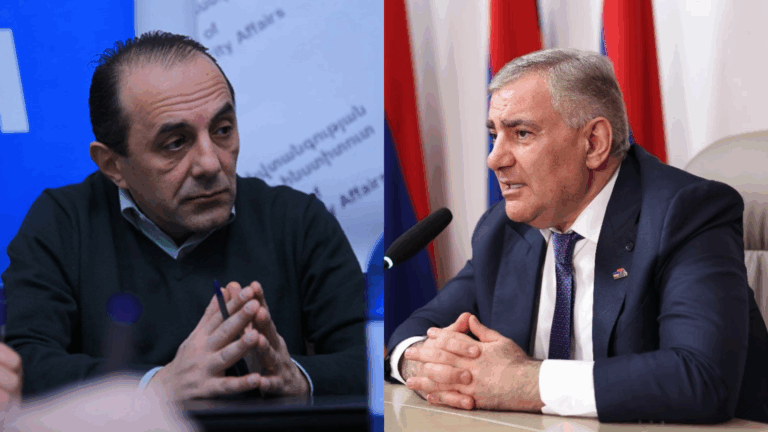
Political scientist and expert on post-Soviet countries Aslan Rubaev spoke to Alpha News on the formation of an anti-Russian bloc in the South Caucasus, the role of Nikol Pashinyan in weakening Armenia’s foreign policy, and the influence of British intelligence services on regional developments.
“An anti-Russian bloc has formed in the South Caucasus region. Aliyev and Pashinyan are part of this bloc, and at this stage they have more claims against Russia than against each other. Therefore, Pashinyan does not intend to use the crisis in relations between Azerbaijan and Russia as a situation that is advantageous for Armenia, which, of course, is currently taking place. This is because Pashinyan cannot currently perform the function of protecting national Armenian interests. He was assigned different tasks. He is not ready to protect the interests of Armenia, he is not ready to defend Armenia’s positions on the international stage in any way. Of course, they are playing one big game, and with each step, it is becoming obvious that, globally, the British intelligence services are behind all these Armenian and Azerbaijani anti-Russian attacks. And they will do everything that Britain tells them to do,” Rubaev said.
According to the expert, Armenia, thanks to Pashinyan, has greatly damaged its political image on the international stage.
“It must be said that today’s Armenia—thanks to Pashinyan—has severely damaged its political image on the global stage. Based on coverage in international media, now Armenia is viewed more as a country that does not know where to go, which does not have a clear foreign policy direction. Many Western media outlets are asking the question: why has Armenia chosen to unilaterally damage its relationship with its main strategic partner, Moscow? This is a rhetorical question. It is clear why: Armenia, like Ukraine in its time, is governed by externally backed figures who merely play a role and are not truly connected to the country. Pashinyan is not connected with Armenia, he does not see his future—or his family’s future—in Armenia. He sees it somewhere in Miami. Perhaps even in Israel, I do not know for sure. But certainly not in Armenia,” Rubaev concluded.
 Now live