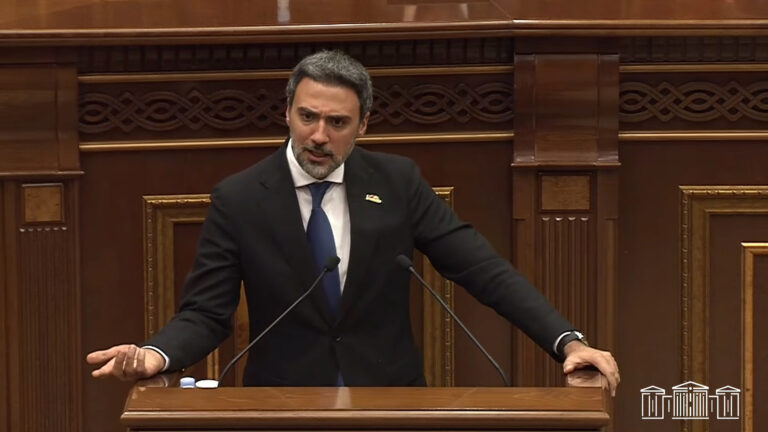

Pashinyan is making serious mistake by trying to ‘sit on several chairs’ – Vladimir Sergienko
October 30 2025, 13:35
Speaking with Alpha News, German political scientist Vladimir Sergienko commented on Armenian Prime Minister Nikol Pashinyan’s visit to France.
“Pashinyan is working for a domestic market that occasionally requires support from external European players who demonstrate their attention to the country and its people, as well as their involvement in short-term processes affecting the population. Of course, Armenia plays a role in regional stability, but this situation may change in the future. These changes may be related to the military programs that France is developing jointly with Armenia. When it comes to instructors and sharing experience, that’s one thing, but discussions about drones, radar stations, and training personnel for these stations already touch upon the interests of global players in the region,” Sergienko said.
According to the expert, arms purchases from France and Armenia’s participation in certain NATO processes represent a direct challenge to Russia.
“It’s also important to note Armenia’s move toward NATO standards—a path previously taken by Ukraine, Georgia, and now Moldova. This doesn’t mean the country will join the EU or NATO in the short or long term. It’s about building a policy of engaging external players in the region. Currently, there’s no guarantee this will stabilize the situation. Arms purchases from France and Armenia’s participation in certain NATO processes represent a direct challenge to Russia. Is this a wise move, a bid to win over the electorate, or an attempt to hold onto power? No—this is Pashinyan’s personal opinion, which appeals to France. France needs tools to pressure Russia and potentially destabilize the Caucasus region. The EU and NATO have been observing this for many years,” Sergienko noted.
According to the political scientist, Pashinyan is trying to “sit on several chairs.”
“I believe Pashinyan is currently making a serious mistake in international relations by attempting to ‘sit on several chairs.’ He must make a decision—perhaps even terminate certain interstate agreements—to clarify how stable the region will be and how external players will view the NATO radar stations that have been deployed on Armenian territory for the next decade,” Sergienko concluded.
 Now live