
Peace between Armenia and Azerbaijan is still far away – Alexander Tsinker
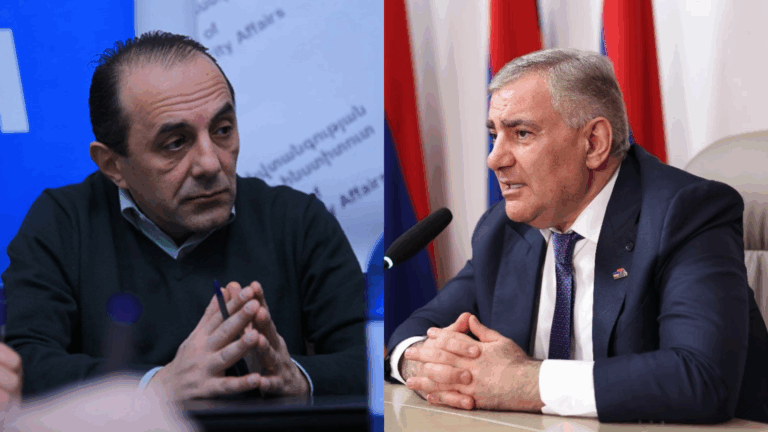
Alexander Tsinker, head of the International Center for Eurasian Studies (ICES), spoke to Alpha News about Armenian Prime Minister Nikol Pashinyan’s statement that the conflict between Armenia and Azerbaijan is over politically but continues in its socio-psychological dimension.
“Globally, there is a growing perception that an agreement between Armenia and Azerbaijan has already been initialed. There’s no full-fledged signed agreement yet, but the process seems to be moving forward, and they say that only minor details remain to be resolved—and then everything will be fine. However, in reality, many problems still lie ahead. First, Azerbaijan hasn’t ended its claims against Armenia. It still has concerns—both about the text of the agreement and about what it believes Armenia still needs to do. Meanwhile, what Armenia itself has to say about Azerbaijan isn’t entirely clear, if at all. On the other hand, the attitudes toward a peace treaty among the countries’ leaders and the population are two very different things. Take the example of Israel and Palestine: even if leaders at the top were to sign an agreement, in practice, it would take several generations for education systems, ways of thinking, and perceptions of the ‘enemy’ to change. The same thing applies to Armenia and Azerbaijan. If you open school textbooks and look at how history is presented, you’ll see that the neighboring state is portrayed precisely as an enemy. And this cannot be changed with just one signature,” Tsinker said.
According to the expert, there is a problem between what the leaders represent and what the people feel.
“There’s a major problem: what the leaders of these countries want—or at least declare—and what their citizens truly think are two very different things. I read comments from Armenians about Azerbaijan and Azerbaijanis about Armenia, and it’s clear that true peace is still far away. Much remains to be done. Naturally, the authors of this agreement—the leaders of both countries—are trying to ensure that the process does not fail. While Pashinyan tries to emphasize in all his speeches that ‘we are moving towards peace’ and ‘our program leads to peace,’ Azerbaijani leader Ilham Aliyev’s speeches usually convey a different message. He first talks about signing the agreement, and in the second sentence, he begins listing claims. Moreover, these claims relate not only to the current situation but also to history—for example, the recent statement that Sevan is supposedly not an Azerbaijani name and that everything needs to be rebuilt ‘in an Azerbaijani way.’ Such statements do not bring peace closer but push it further away. It is therefore unsurprising that the public reaction to such statements in Armenia is extremely negative. The general mood is that people don’t really believe in the possibility of real peace under the current approach,” Tsinker concluded.
 Now live