
Vagharshapat consequences: who will Pashinyan hide behind in 2026?
November 18 2025, 20:20
The elections to the City Council of the Vagharshapat community, held on November 16, 2025, were not simply a local electoral event but a significant milestone ahead of the parliamentary elections. The victory of the Civil Contract party, which secured 19 mandates, was achieved through strategic maneuvers undertaken by the authorities long before election day. The ruling party employed a comprehensive approach, combining administrative resources, financial incentives, and shifts in political rhetoric.
Months before the vote (on June 20), the Vagharshapat community was expanded through the merging of the Khoy community and several adjacent villages. Such administrative changes are often used to alter the electoral balance and dilute traditional opposition strongholds.
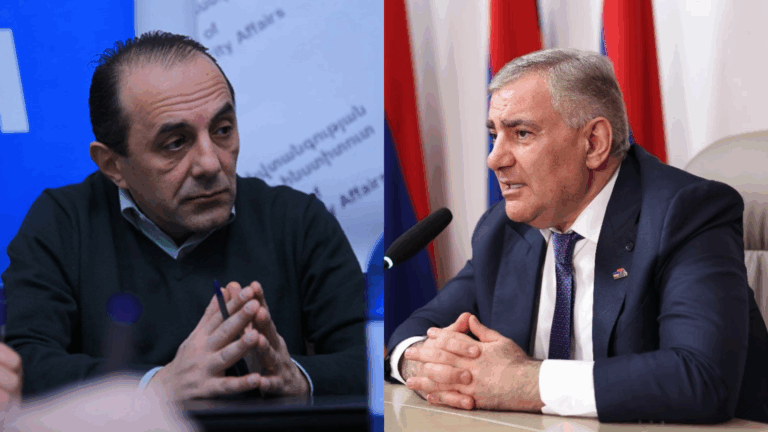
According to Civil Contract candidate Argishti Mekhakyan, in the months leading up to the elections the government allocated nearly half a billion drams for subsidized projects in the community. Mekhakyan announced this during major debates on Public Television of Armenia. This direct financial injection into infrastructure and social projects undoubtedly influenced the outcome.
It is also noteworthy that Mekhakyan deliberately avoided mentioning his party affiliation during the campaign. This allowed him to distance himself from the national agenda, from the toxic political image of Nikol Pashinyan, and to focus on local populism.
Against this backdrop, the election results were as follows: Civil Contract — 19 mandates; the Victory bloc — 12 mandates; the Mother Armenia party — 2 mandates. The results clearly showed that the fragmented participation of multiple opposition parties played into Pashinyan’s hands (around 7% of opposition-minded votes did not go to any single party). Moreover, analysts argue that Pashinyan orchestrated the creation of several “proxy political parties” which, while posing as opposition, siphoned off small but critical portions of the electorate from the real opposition. A key role in this process was played by the Free Democrats party. Its impact proved even more significant than that of the Republic party. The Free Democrats captured about 4% of potentially opposition votes, effectively acting as a “Trojan horse,” which critically helped Civil Contract secure victory. This demonstrates the urgent need for rational consolidation of the opposition before 2026.
A comparison of the results of Victory bloc candidate Sevak Khachatryan (over 10,000 votes) with those of Civil Contract’s Diana Gasparyan, who won in 2021 (also around 10,000 votes), reveals substantial opposition potential. A slight increase in voter turnout could have dramatically shifted the balance of mandates. In light of these challenges and the need for consolidation, the emergence of a new political force led by Samvel Karapetyan is expected to become a key catalyst for opposition unification.
Improving grassroots work should also contribute: while the opposition has learned to document violations, it still lacks effective tools to prevent them.
The 2025 Vagharshapat elections vividly demonstrated how the authorities can mask the national political agenda by using local candidates and administrative levers to secure victory. If, in municipal elections, Pashinyan can afford to “hide” behind the figure of a local caretaker, the inevitable question arises: who will Pashinyan hide behind in 2026?
For the opposition, answering this question—along with questions about participation formats, methods of boosting turnout, and preventing fraud—requires swift and effective solutions. Moving away from fragmentation into numerous small parties and developing a coherent strategy to counter the administrative, financial, and tactical maneuvers of the ruling party, including the use of proxy forces, is essential.
Think about it…
 Now live