
Georgia’s biggest mistake was perceiving West as only alternative – Archil Sikharulidze
December 06 2025, 11:06
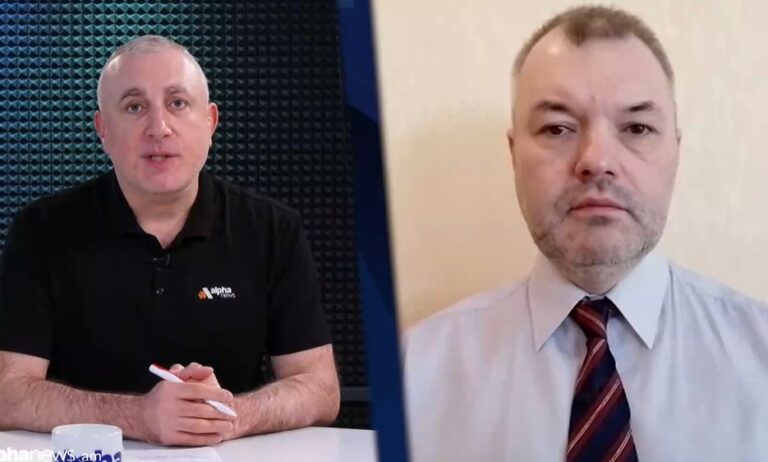
Speaking with Alpha News, Archil Sikharulidze, political scientist and founder of the SIKHA FOUNDATION research institute, commented on Azerbaijan’s statements regarding the so‑called “Zangezur corridor” and the EU’s attitude toward Georgia’s foreign policy.
“Our colleagues in Azerbaijan fail to realize that the Georgian political elite is currently not at all interested in Azerbaijani disputes. It is focused exclusively on internal struggles—whether to pursue a European future or the future of a sovereign state. For example, when a plane crashed, accusations were made that Georgia had shot it down or helped Russia. For Georgian society, such accusations are incomprehensible and do not attract interest. I would be glad if the statements made in Azerbaijan, Russia, and Armenia were also taken into account here, so that we understand what is being discussed. Georgia certainly does not need problems with Azerbaijan, Russia, or Armenia. The threats seem ridiculous, because it is unclear what exactly is being threatened and why,” Sikharulidze said.
According to the expert, Europe declared Georgia “unwelcome” because Tbilisi began to defend its sovereignty and national interests.
“We did not leave Europe voluntarily—we were pushed out. There is a part of society that believes Georgia owes its well‑being to Europe and America and must integrate into the EU. Any disagreement is immediately labeled a pro‑Russian position. Brussels accuses us of backsliding on democracy and sees the ‘Georgian Dream’ as a failed project. Yet the majority of the population does not believe it must sacrifice the country for the interests of the West. We have already fought in Afghanistan and Iraq, helped Ukraine, and paid tribute to NATO with blood. The people are tired and unwilling to repeat the Ukrainian scenario. Nevertheless, this majority has been declared ‘unwelcome’ and cast out of the boat of European integration. Although in terms of democracy, freedom of speech, and economic growth Georgia was ahead for a long time, it turned out we were ‘insufficiently in solidarity.’ This even irritates pro‑Europeans: they do not understand how Azerbaijan and Armenia became closer to Europe than Georgia. For us, this is a blow to our image. Georgia’s main mistake was perceiving Europe and America as the only alternative and failing to develop other directions: China, Central Asia, Turkey, Azerbaijan. Now the elites are forced to seek new ties and talk about multipolarity. This could be an important lesson for Armenia: one cannot rely solely on a single power—whether Europe, America, or Russia. We made this mistake, and we are still paying for it. But what is happening helps society understand that geopolitics has always been about business—about money and about power. That is the main lesson for Georgia,” the political scientist said.
 Now live