
Nikol Pashinyan turns into Arayik Harutyunyan
December 25 2025, 14:50
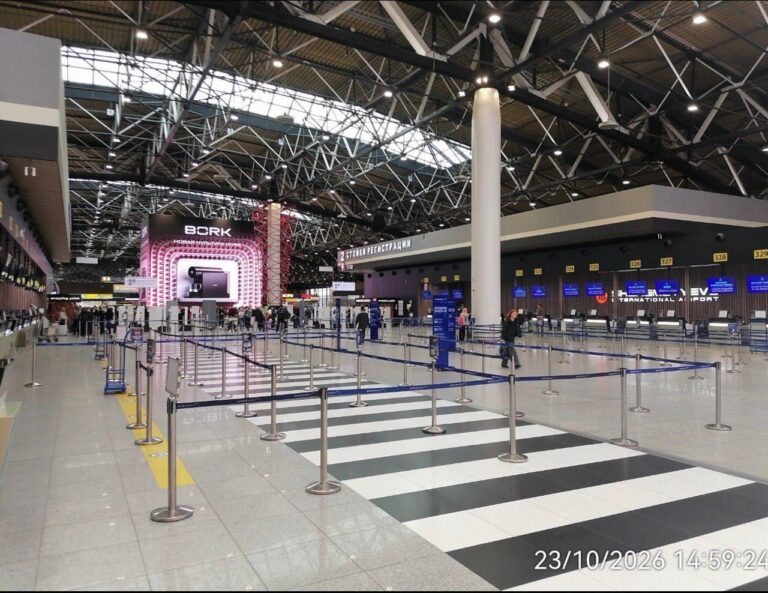
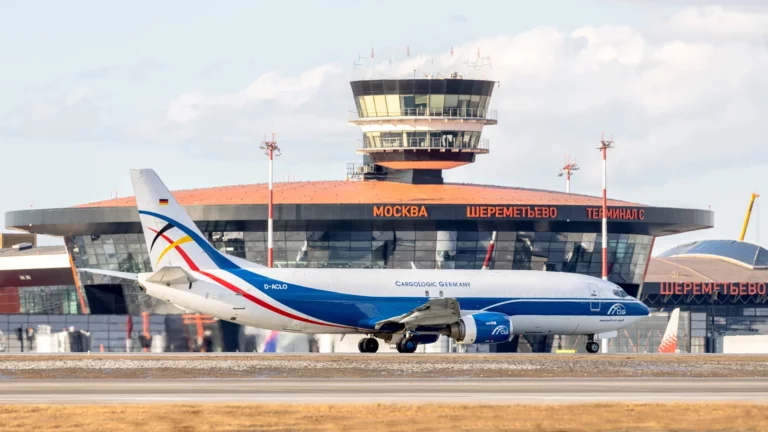
In the modern political process, the boundaries between domestic and foreign policy are becoming increasingly blurred. Ahead of the 2026 parliamentary elections in Armenia, a unique phenomenon is observed: external actors, namely Turkey and Azerbaijan, are de facto entering the electoral campaign, using instruments of “soft power” and economic diplomacy. Recent initiatives—the launch of regular Turkish Airlines flights on the Yerevan–Istanbul route and Baku’s declaration of readiness to ensure the transit of Armenian goods through its territory—should be seen not merely as normalization of relations but as a carefully designed strategy to stabilize Armenia’s current political regime.
The opening of air connections and transit corridors should be interpreted in political science discourse as the creation of “symbolic capital” for Armenia’s executive power. For Nikol Pashinyan, these steps serve as empirical confirmation of the viability of his foreign policy doctrine, the “Crossroads of Peace.” Ankara and Baku deliberately create a positive informational backdrop, demonstrating tangible “peace dividends” to the Armenian electorate. This is a direct attempt to influence citizens’ electoral preferences, aimed at neutralizing the opposition’s narrative about the destructiveness of the ruling party’s course.
In the event of Pashinyan’s success in the 2026 elections, Armenia will inevitably face deepening disintegration from its traditional partners—Russia and the Eurasian Economic Union (EAEU). As ties with the northern vector are dismantled, Armenia will fall into asymmetric dependence on the markets and transport hubs of Turkey and Azerbaijan.
In this economic model, Ankara and Baku gain powerful levers of indirect control. Economic transit, which today is presented as a “gesture of goodwill,” tomorrow will turn into an instrument of political blackmail. Any deviation by Yerevan from the prescribed course could be punished by blocking logistics chains, which—given the absence of alternatives due to the rupture with the EAEU—would trigger an immediate socio-economic shock. Thus, today’s “symbolic steps” lay the foundation for tomorrow’s regional protectorate.
The most alarming aspect of this transformation is the inevitable loss of agency by the head of state. In political science, there is the concept of “devaluation of leadership,” when a political figure, having lost real levers of influence over processes, turns to imitative forms of protest or mobilization. A direct analogy can be drawn with the actions of former Nagorno-Karabakh (Artsakh) President Arayik Harutyunyan.
On July 17, 2023, Harutyunyan, facing complete blockade and loss of political maneuver, announced a sit-in strike at Renaissance Square in Stepanakert. His appeal to the international community and the UN Security Council, urging them “not to ignore Azerbaijan’s aggression,” was an act of political despair.
A leader’s sit-in strike is the highest form of acknowledgment of his own helplessness and the destruction of the state institution he represents.
If Pashinyan’s power is reproduced in 2026 and he later faces harsh pressure from Azerbaijan under conditions of full dependence, we may witness a repetition of this scenario. When all institutional levers are handed over externally, and Russia’s support is finally lost, Pashinyan’s only tool may be sit-ins or calls for street mobilization against external forces on which he himself has become dependent. However, as Harutyunyan’s example showed, under dependence on Baku’s will, such rallies and strikes have neither political weight nor practical result. This is the path to the final delegitimization of state power as such.
Thus, Turkey and Azerbaijan’s current activity in the Armenian direction is a complex, multi-level operation to preserve the current political landscape in Armenia until 2026. Support for the “Pashinyan vector” through symbolic concessions is aimed at preventing opposition consolidation and maintaining the monolithic nature of the state apparatus. The price of this “stability” is the long-term loss of sovereignty and the transformation of the country’s top leadership into decorative figures, whose future protests and “sit-ins” will be only a symptom of the completed degradation of statehood.
Think about it…
 Now live