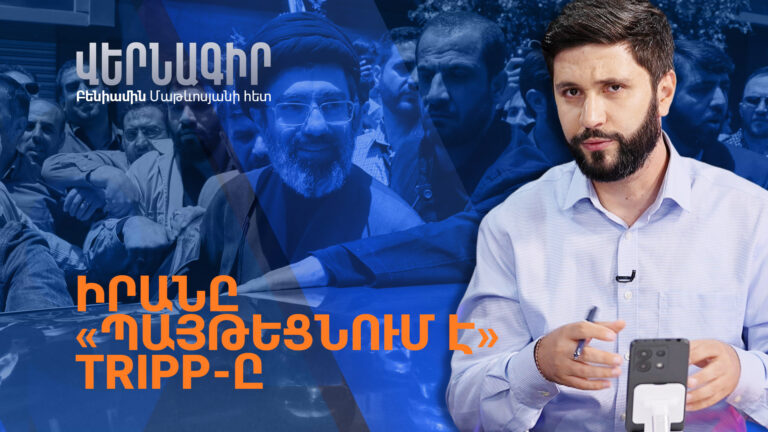

Armen Badalyan | What to Expect in 2016? | Pashinyan may change Constitution in unconventional way
January 09 2026, 20:00
Political strategist Armen Badalyan rules out the opposition’s victory in the parliamentary elections scheduled for June 2026 if the “Moldovan scenario” is applied.
“The essence of the Moldovan scenario is that, even through unfair methods, it is necessary to ensure that the government favored by the EU retains power. In this case, the opposition cannot win—it is excluded. I assume that the authorities checked various sociological surveys and saw that without the Moldovan scenario they cannot retain power. Preserving power serves the interests of both Pashinyan and the European Union. With the Moldovan scenario, the government wins; without it, the opposition does,” said Armen Badalyan.
It should be recalled that on December 15, EU High Representative for Foreign Affairs and Security Policy Kaja Kallas stated that Armenia had asked the EU for assistance in combating external interference ahead of the elections—similar to the support the EU provided to Moldova. Earlier, Kallas also noted that Russia had intensified its disinformation campaign in Armenia in the run‑up to the vote.
According to Armen Badalyan’s observation, if Pashinyan is re-elected in 2026, he may change the Constitution in an unconventional way—that is, without holding a referendum. According to Badalyan, this corresponds to Aliyev’s demand, who claims that Armenia’s Constitution allegedly contains territorial claims against Azerbaijan.
“If the Civil Contract party retains power, they will be able to argue that all the percentages received in the parliamentary elections are an expression of the people’s trust in these forces to change the Constitution. Then the National Assembly will amend the Constitution. If anyone objects or criticizes, they will be told to appeal to the Constitutional Court. But it is hard to imagine the court responding in any way other than what the authorities require, and the matter will be closed. In other words, they may bypass a referendum and change the Constitution in an unconventional manner. Many will say that this contradicts the Constitution, but what then? The main thing is the result of the process, and the issue will be closed,” Badalyan said.
 Now live