
Is Ankara choosing Armenia’s Prime Minister?
January 20 2026, 19:30
The political landscape of Armenia ahead of the 2026 elections is beginning to take on features that can hardly be called purely internal. If in the past external influence on the republic’s electoral processes was disguised as “support for democratic institutions,” today the masks have been removed, exposing mechanisms of open and cynical foreign interference. We are witnessing an unprecedented process: key regional and extra-regional players, whose interests historically contradict the very existence of a strong and sovereign Armenia, are effectively acting as the main “political strategists” and guarantors of stability for the current government.
The statement by Turkish Foreign Minister Hakan Fidan about supporting Armenian Prime Minister Nikol Pashinyan in the context of the upcoming elections is not just a diplomatic courtesy but a direct intervention in the political field of a sovereign state. “In June 2026, elections will be held in Armenia, and this period will become an important stage of the process. We see that Pashinyan is currently leading in public opinion polls. We truly support the constructive role he plays in this matter. This line and this political will must be preserved further,” he said.
Fidan openly acknowledged that Ankara has chosen its favorite candidate, emphasizing the “constructive role” played by the current prime minister. For Turkey, Pashinyan has become the ideal “regional manager,” under whom in 7.5 years goals once considered unattainable for decades were achieved: the complete elimination of Artsakh’s subjectivity, de facto consent to opening the border on Turkish terms, and the advancement of the so-called “Zangezur corridor,” capable of finally cutting Armenia in half. With such a scenario, it is hardly surprising that suspicions are growing about a “coordinated political game” between Yerevan, Baku, and Ankara. When the foreign minister of an antagonistic country cites Armenian polls and wishes success to a specific candidate, he sends a clear signal: continuity of the current course benefits Turkey, as it guarantees further unilateral concessions from Armenia.
This process is further reinforced by “pre-election bonuses” from Ilham Aliyev, such as supplies of cheap gasoline, which collectively turn Armenia into an object whose fate foreign actors seek to determine.
Meanwhile, Baku continues to actively promote the destructive concept of “Western Azerbaijan,” effectively laying territorial claims to all of Armenia’s remaining territory. A sinister duet emerges: with one hand Aliyev sends fuel to support Pashinyan’s ratings, while with the other he prepares the ideological ground for the future absorption of the republic.
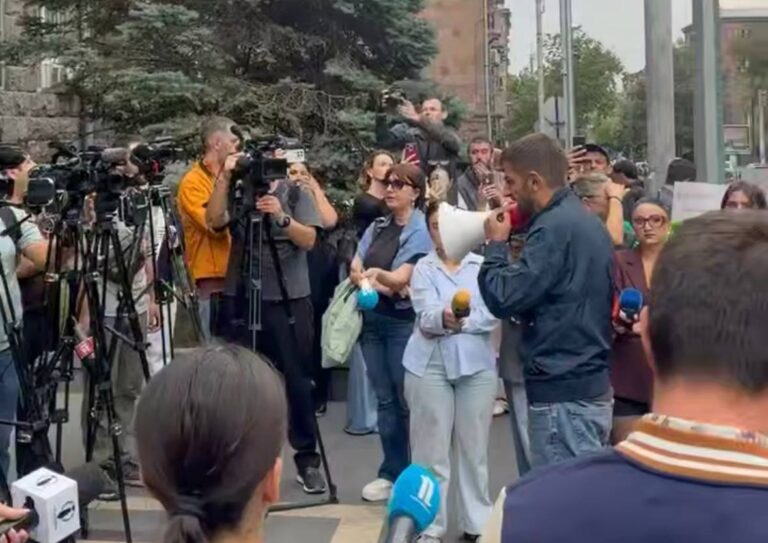
Equally troubling has been the reaction of Armenia’s so-called civil society. Instead of acting as a shield of national security and resolutely condemning any interference in internal affairs, representatives of the largest NGOs—long dependent on foreign grants—rushed to defend Hakan Fidan. Pro-government activists began insisting that the Turkish minister’s words were “misinterpreted” by the opposition or were in fact a subtle attempt by Turkey to “harm” Pashinyan through a backhanded compliment.
Without the “nationalization” of civil society, any talk of sovereignty remains an empty declaration. The 2026 elections will become a moment of truth for the country. Either Armenia will find the strength to restore its subjectivity and force respect for its internal processes, or it will finally cement its role as a territory where power is appointed and maintained thanks to Ankara and Baku’s approval, applauded by foreign-funded activists. Today Turkey is in the best position it has ever been: it has found in Armenia’s current leadership a disciplined executor of its regional ambitions.
The main question remains open: who will ultimately congratulate the winner in June 2026—will it be the Armenian people, celebrating their country’s regained dignity, or Ankara, congratulating its “best manager” on extending his mandate for further dismantling of the republic?
Think about it…
 Now live