
‘Pashinyan’s Dead End’ instead of ‘Crossroads of Peace’
February 19 2026, 12:44
The launch of the practical stage of construction on the Rasht–Astara railway section, officially scheduled for April 1, 2026, effectively redraws the map of influence in the South Caucasus. This is not merely another construction project, but a point of no return, after which the region’s strategic reality will take on sharper contours.
Russia’s Energy Minister Sergey Tsivilyov has already confirmed that all bureaucratic and land barriers have been removed, and Moscow and Tehran are prepared to invest €1.6 billion in this 160‑kilometer stretch. Yet behind these dry investment figures lies a dramatic challenge for those accustomed to speaking of “multi‑vector transit” without any solid foundation beneath it.
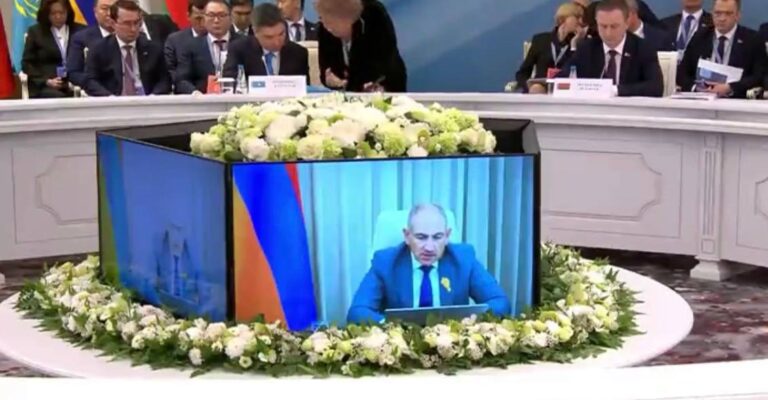
If the North–South International Transport Corridor operates smoothly, and the TRIPP initiative is implemented in its current form, Baku will gain absolute monopoly control. By simultaneously securing both the Middle Corridor and the North–South route, Azerbaijan becomes the region’s sole “gateway.” In this situation, the ambitious “Crossroads of Peace” promoted by Pashinyan’s government inevitably turns into “Pashinyan’s dead end.” Armenia risks remaining only a nominal participant in transit processes, while the real levers of control over flows will be in the hands of its neighbors.
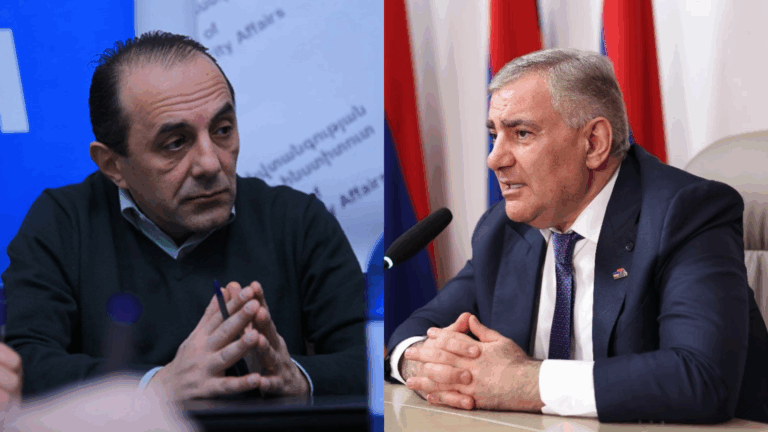
As Armenia’s second president Robert Kocharyan openly states, TRIPP in its current form is essentially an American gift to Aliyev, delivered at the expense of the Armenian people. In his view, without a full‑fledged Armenia–Iran railway connection, the project will amount to little more than minor transit, bringing no real benefit to Armenia and reducing it to a “half‑side,” squeezed by foreign interests.
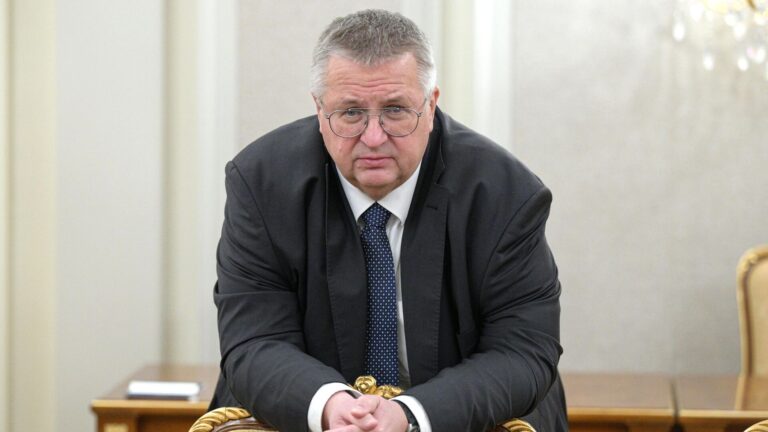
Meanwhile, Russia’s active involvement in the Rasht–Astara project once again demonstrates that Moscow is not leaving the region, but rather consolidating its presence through long‑term infrastructure commitments. Yet to avoid becoming hostage to Baku’s transit ambitions, Russia must accelerate the opening of alternative routes. This includes restoring the railway through Abkhazia—a project that Deputy Prime Minister Alexey Overchuk has already identified as under serious consideration. Kocharyan’s arguments here are particularly sharp and pragmatic: the Yerevan–Tbilisi–Sochi–Tuapse–Krasnodar–Moscow railway is 600–700 kilometers shorter than the route through Azerbaijan.
Kocharyan rightly calls it a crime to ignore this direction, since its restoration would require only modest funds—around $100 million, incomparable to the “mythical billions” cited in government reports. For Armenia, opening the Abkhazian section would be “nothing short of a dream,” instantly nullifying Azerbaijan’s transit advantage. As soon as the first train runs along this route, Kocharyan says, “not a single wagon will pass through Azerbaijani territory.”
Today presents a unique opportunity: Georgia, aware of the risk of losing Armenian cargo, will be far more interested in opening the Abkhazian railway for purely economic reasons. Such a step would not only restore the balance of power but also create the shortest link between Turkey and Russia. Ultimately, if the launch of Rasht–Astara symbolizes Baku’s growing strength, reviving the Abkhazian route must serve as the necessary counterbalance—one that strips Baku of its monopoly and pulls Armenia out of its logistical dead end.
Think about it…
 Now live