
Beniamin Matevosyan: after the generation destroyed in 2020, Pashinyan has set his sights on school students
April 02 2026, 20:30
(The “revolution of love and solidarity” is devouring school students)
Armenia’s political path has reached a critical juncture beyond which even declarative statements about “human rights” cease to exist, and fear outweighs electoral calculation. Any government with even a minimal instinct for self-preservation tends, on the eve of an electoral cycle, to smooth over sharp edges and avoid direct confrontation with the most politically active social groups. In Armenia’s reality, however, the fear of losing the prime ministerial seat outweighs any rational calculation or moral restraint.
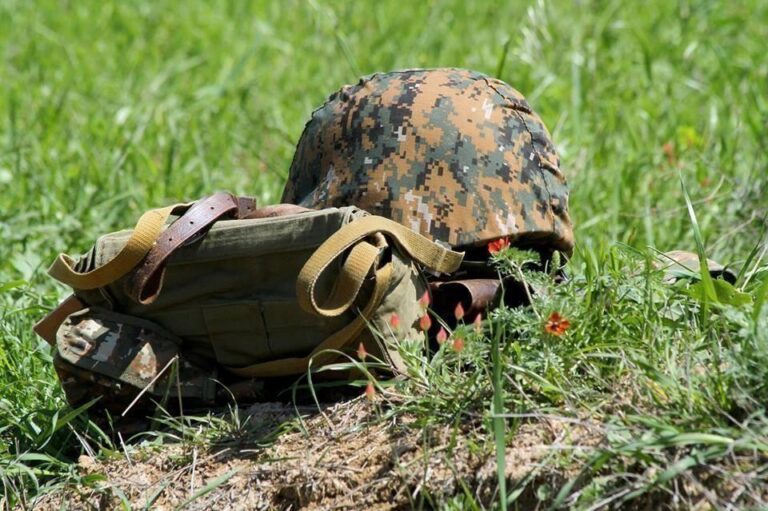
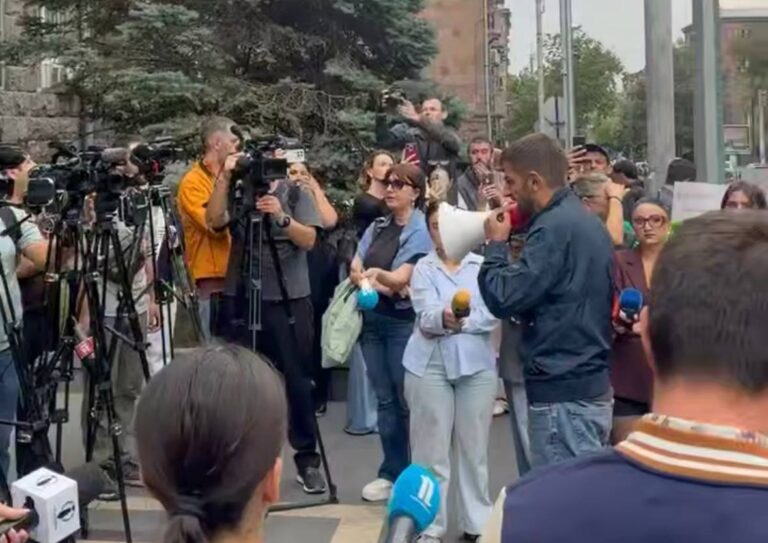
The two-month pre-trial detention of 18-year-old schoolboy David Minasyan in connection with an incident at the Church of Saint Anna is not merely a legal preventive measure, it is a symbolic act in which the fate of a young man is sacrificed on the altar of Nikol Pashinyan’s personal peace of mind. This case cannot be viewed in isolation from the broader context of Nikol Pashinyan’s rule, whose “revolution” has in practice demonstrated a capacity to destroy those who were supposed to become the country’s future. The authorities are now torpedoing a second generation of citizens, stripping them of their right to dignity and safety. The first lost generation was those young men, conscript soldiers, who perished in the flames of the 44-day war of 2020 in Artsakh. That tragedy will forever remain an open wound, all the more so against the backdrop of the Prime Minister’s own cynical admission. His words, that “we could have had the same result as now, but without the casualties,” had the appropriate political decisions been taken in time, read as a final verdict on the state strategy of that period.
A government that began with promises of absolute freedom today feels so vulnerable that it sees an existential threat in a schoolboy defending his values or his faith. For Pashinyan, the preservation of personal power has become an end in itself, for the sake of which he is prepared to ride roughshod over the interests of the younger generation. The future of the nation is precisely those 18-year-olds who should today be studying at universities, learning professions, or serving honorably in the armed forces. Instead, the state machine offers them a prison bunk as the price of dissent from the official line. Such a policy inevitably leads to the degradation of the foundations of the state, as it erodes young people’s trust in the very idea of justice and the rule of law in their own country. Setting precedents whereby those who are effectively still children are imprisoned for their political or religious views places Armenia in an acutely shameful position.
This is not merely a tactical miscalculation on the part of the leadership, but a conscious choice of a path on which fear and the suppression of will become the only means of governing society. Armenia is turning into a local version of Azerbaijan. Personal retribution against a generation that witnessed the collapse of illusions in 2020 and now refuses to blindly submit to manipulation has become the prime minister’s defining course of conduct. “A child as a political prisoner:” a new and shameful page is being opened in Armenia’s history. Eighteen years of age is when a young person should be studying at university or serving in the army, not sitting in prison for political or religious views.
Think about that…
 Now live