
Beniamin Matevosyan: R.I.P. TRIPP
April 09 2026, 16:40
(How the Iran war has affected Armenia)
The visit of Iranian parliament speaker Mohammad Ghalibaf to Islamabad for talks with the United States marks not merely a diplomatic pause, but a tectonic shift in the hierarchy of Middle Eastern power and in the confrontation between the US and Israel on one side and Tehran on the other. The appointment of Ghalibaf, a hawk of Iranian politics, underscores Tehran’s self-perception: they are entering negotiations as anything but a defeated party. The ceasefire announced by Donald Trump following the escalation reads as Washington’s acknowledgment of the catastrophic consequences for the global economy that would follow if hostilities continued.
Iran’s list of ten demands including recognition of its right to uranium enrichment, the full lifting of sanctions, the withdrawal of American troops, and the payment of reparations is not merely a set of treaty points, but a manifesto of a new reality. Tehran has demonstrated that a modern regional power, even one that has suffered deeply painful losses, is capable not only of withstanding a global empire, but of turning its opponent’s economic infrastructure into a hostage of its own course. Oil and energy facilities in countries that had relied on American security guarantees became legitimate targets, proving that the presence of US bases is no longer an “insurance policy.” Iran’s emergence from this trial by fire with control over the Strait of Hormuz intact has confirmed its standing as a sovereign actor.
In this configuration, the TRIPP project, aimed at redrawing the South Caucasus and creating a “sanitary cordon” around Iran through the infrastructure of the «Turkic world», finds itself in deep crisis. As long as the current government remains in power in Tehran, TRIPP becomes a potential target. Without any deterrents, Iran has a free hand to directly counter this route, making any investment in it excessively risky.
Even a regime-change scenario that transforms Iran into a pro-Western “Eurasian Venezuela” renders TRIPP pointless: direct control over Iranian territory would eliminate the need to construct complex bypass routes through Armenia. The project is either ineffective as a means of containing the regime, or unnecessary in the event of its absorption by the West.
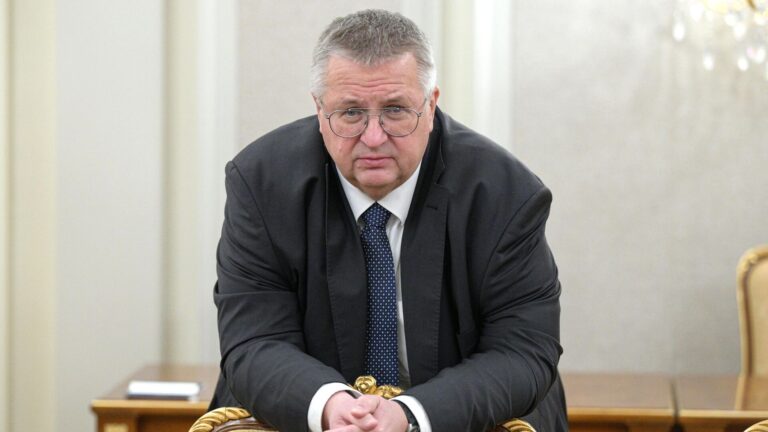
For Armenia, these developments should serve as a prompt for a fundamental reassessment of foreign policy. Russian Deputy Prime Minister Alexei Overchuk’s references to the Treaty of Turkmenchay and his emphasis on the need for the unblocking of communications to account for the interests of all regional countries are a direct signal that a security architecture cannot be built in defiance of the interests of key players. By attempting to align itself with the logic of TRIPP, Armenia risks becoming an instrument in a game whose rules have just been rewritten. To try to swim against this geopolitical current, ignoring the emergence of a strengthened regional superpower, is to expose one’s own statehood to a serious blow.
Today’s Iran is unambiguously one of the regional centers of power, capable of defending its interests. It is time for Armenia’s leadership to recognize that betting on extra-regional forces, which are now looking for ways to “save face” in negotiations with Tehran, is reckless. If Yerevan continues to ignore the regional consensus, it may find itself isolated at the very moment when the “sanitary cordon” is no longer needed by those who created it. Armenia can survive this storm only if it stops being a part of someone else’s strategy and begins to account for the real balance of power that has taken shape in the region.
Think about that…
 Now live