
Pressure on Iran has resulted in growing influence and improved standing: Leonid Tsukanov
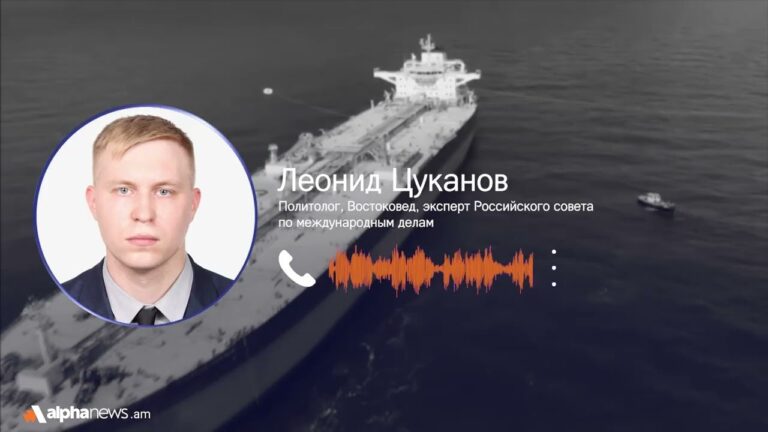
Leonid Tsukanov, political scientist, Middle East expert, and fellow at the Russian International Affairs Council, commented to Alpha News on developments in the Middle East.
“The situation in the Middle East, to put it briefly, is going through yet another phase of transformation, a large-scale redistribution of spheres of influence and geopolitical weight. In other words, this is a logical continuation of the conflict that the US and Israel unleashed against Iran in 2025 and continued in February 2026. Accordingly, now, as the focus shifts from the Strait of Hormuz toward the Red Sea and the Bab-el-Mandeb Strait, all sides are pulling their forces in that direction.
That is, while Iran’s control over the Strait of Hormuz is already essentially uncontested, meaning the US has to reckon with Tehran’s position and its vision of how shipping in that area should be conducted, in the case of the Red Sea, until recently the control of Iran-aligned Yemeni Houthis over Bab-el-Mandeb was not as solid. Accordingly, there remained room for maneuver and the possibility of rerouting some supply chains, which in turn reduced the effectiveness of this Hormuz lever.
But now, in recent days, the situation has developed differently: the Saudis attempted to proactively clear the coast of Houthi forces, but in the end their loyalists and proxies actually ceded most of the Red Sea coastline, with the possible exception of the Taiz salient and two strategically important islands, to pro-Iranian forces. Accordingly, the ability of the ‘Axis of Resistance’ to control this route and this artery has grown noticeably, and all of this creates an additional lever of pressure on the US in the region, and on its regional allies. And this gives Iran fairly strong bargaining chips in negotiations over the future of the Middle East,” the expert believes.
According to the political scientist, the shifting balance of power in the Middle East threatens to drive up global hydrocarbon prices.
“First of all, this is, of course, Iran’s ability to use the Houthis as a proxy to regulate maritime traffic in the area and, accordingly, to put direct pressure on the Arab monarchies and Saudi Arabia, which, at the height of the Hormuz crisis, redirected a significant share of its shipments to Red Sea ports. This is also a strategic challenge for the US, because paradoxical situations are arising in which the attempt to pressure Tehran at the negotiating table has left Iran in an even stronger position than before. It is a strategic challenge for Israel as well, because, unlike other neighbors, it has already faced direct negative consequences during the previous blockade of the Red Sea. At that time, Houthi actions effectively bankrupted the port of Eilat, which had been a key trade and economic hub and one of the country’s points of development. And so, accordingly, Iran and its allies now have the ability to pressure their opponents even further and advance their vision. And this, of course, will also be reflected in energy prices,” Tsukanov concluded.
 Now live