
Armenian authorities are presenting the situation as if the CSTO is pushing Armenia out: Nikolai Silaev
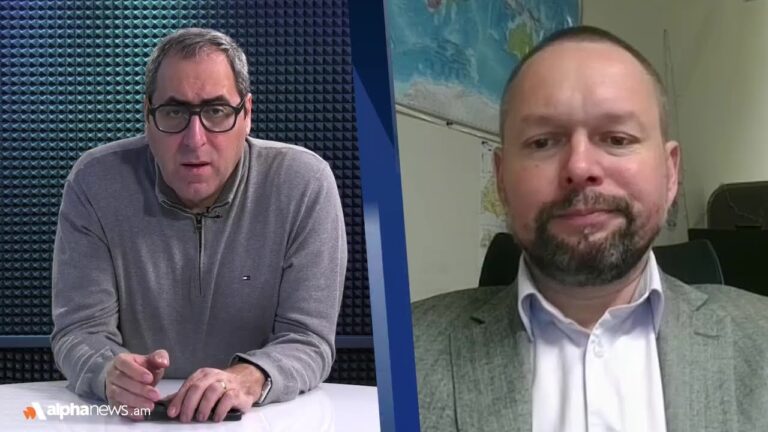
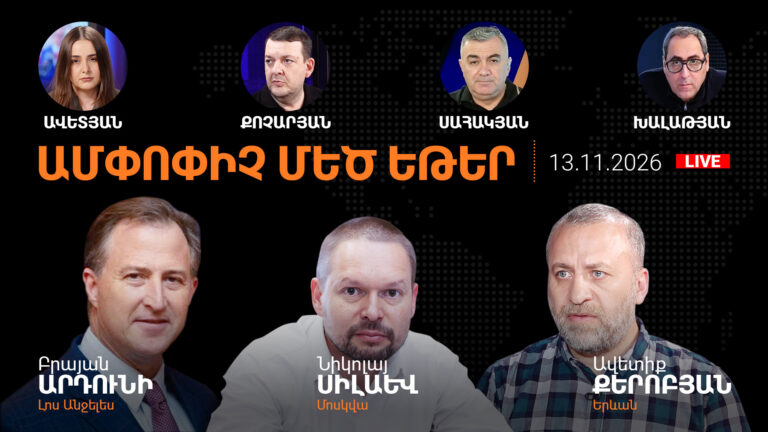
Nikolai Silaev, Leading Research Fellow at the Institute for International Studies of MGIMO University under the Russian Foreign Ministry, spoke to Alpha News about the decision to strip Armenia of its voting rights in the CSTO. He also assessed the future of Russian–Armenian relations, Yerevan’s membership in the EAEU, the prospects for Armenia’s European integration and the negotiation process on Ukraine.
“The option chosen was practically inevitable, and it does not change Armenia’s current security guarantees within the CSTO. The Charter describes a situation where a country does not pay its contributions and does not take part in activities. The consequences in such a case follow almost automatically, and it would be strange not to apply this part of the Charter. Armenia keeps its membership and legally binding guarantees.
The country’s authorities are well aware that Yerevan has only two legally established security mechanisms: its bilateral alliance with Russia and the CSTO. There is no line of other countries ready to offer comparable guarantees. People inside the country will certainly ask why these were given up. That is why the authorities do not want to take responsibility for the break and are trying to present the situation as if the CSTO itself is pushing Armenia out. But the organization is not pushing anyone out. Responsibility for the break will rest entirely with the Armenian authorities,” the expert stressed.
Commenting on a possible visit to Russia by Nikol Pashinyan, Prime Minister of Armenia, and the Eurasian Economic Union summit scheduled for December, Silaev said that the situation around the CSTO is not directly linked to decisions that may be made within the EAEU.
“The EAEU summit and the decisions it makes have nothing to do with the dynamics within the CSTO. These are separate processes. Stripping Armenia of its voting rights is completely neutral with regard to the decisions of the EAEU summit. I think Nikol Pashinyan would gladly go to Russia if he had ideas about what to tell Putin. So far, the only thing he says is: we are on our own, we go where we want and we will integrate into the EU, while you keep trading with us as before and don’t dare change anything. Since the Armenian authorities’ position has not changed, it is unclear what he would bring to Moscow.
Putin has heard this at least twice already, and there is no point in repeating it a third time. Official Yerevan is counting on the EAEU countries either not daring to suspend the treaty with respect to Armenia, or making the suspension a formality with many loopholes that allow trade to continue as before. I’m not sure that is how it will go, but it seems the Armenian leadership is counting on it,” the expert said.
Speaking about the republic’s prospects for European integration, the expert said that the statements of European leaders should be seen primarily as support for Pashinyan, Armenia’s current Prime Minister, rather than for Armenia itself.
“Armenia’s European integration is pure fantasy, and there is nothing to it but fantasy. The EU has promised to admit Ukraine, and it held membership negotiations with Georgia. Georgia is an EU candidate country, yet it has suspended the negotiations. Can you imagine the EU admitting Armenia before Ukraine? For political reasons, that seems impossible. Yes, EU assistance is coming in, and as far as I can tell it is growing, but that assistance cannot make up for the decline in foreign trade. Armenia is damaging its relations with its partners in the Eurasian Economic Union while being certain to get no benefits from the EU. In this situation, the question arises whether the Armenian authorities’ foreign policy is rational in terms of the republic’s national interests, rather than the interests of individual politicians,” Silaev concluded.
 Now live