
Armenia cannot move towards the EU and stay in the EAEU at the same time: Dmitry Suslov
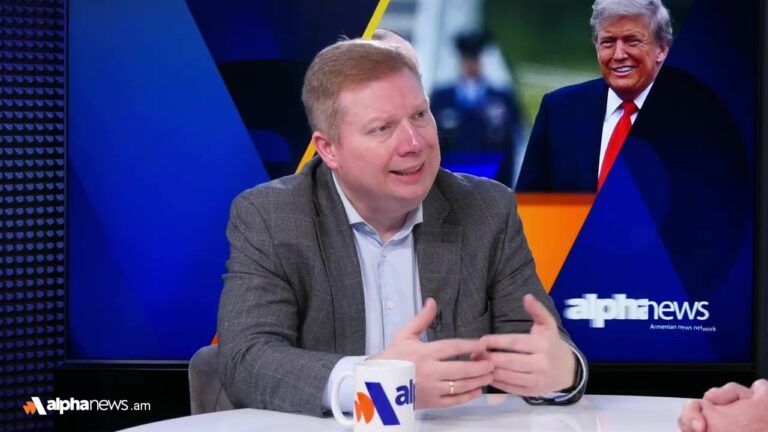
Dmitry Suslov, Deputy Director of the Centre for Comprehensive European and International Studies at the Faculty of World Economy and International Affairs of HSE University, spoke to Alpha News about several topics. He commented on the Armenian prime minister’s upcoming December visits to Russia and his statements about Armenia’s future EU membership. He also discussed the prospects for Armenia’s continued membership of the EAEU, the negotiations on settling the conflict in Ukraine and the upcoming meeting of the leaders of Russia, the US and China.
“Prime Minister Pashinyan’s statements and actions show that he is still pursuing a policy of managed reorientation. He makes no secret of his desire to move closer to the West, and not only to move closer to it, but to join Western structures and essentially switch to the Western side in the current system of coordinates between the West and Russia, and between the West and the Eurasian Economic Union. But he only intends to leave the EAEU when doing so is as comfortable and convenient as possible for Armenia, both economically and politically. In other words, before leaving the EAEU, he plans to wait for an invitation to join the EU,” Suslov said.
The expert stressed that, given the position of Moscow and other members of the bloc, Armenia cannot keep combining EAEU membership with moving towards the EU.
“The position of Russia and most EAEU countries is clear: membership of the Union cannot be combined with a pro-EU course. Armenia will have to make a choice, even by holding a referendum, as President Putin has said. Yerevan is deliberately playing for time, trying to keep the benefits of EAEU membership, such as cheap energy and access to labour and goods markets, while moving closer to the European Union. But that won’t work. According to the estimates in an official report by the EAEU Council, leaving the Union would have devastating consequences for Armenia, including a fall in GDP of more than 17%. That is why Pashinyan’s talks in Moscow and Saint Petersburg at the end of the year will be extremely difficult,” Suslov said.
In the expert’s view, neither Moscow nor Yerevan is yet interested in a final break in relations, and both are trying to keep the door open to restoring cooperation.
“I think what is interesting here is that neither side wants to slam the door for good and burn bridges. Armenia understands that the security situation is still very far from being resolved: there is not yet a de facto delimited border with Azerbaijan, there is no peace treaty and there is no normalisation of relations with Turkey. In these circumstances, it would be short-sighted to announce withdrawal from the CSTO and lose the security guarantees provided by the Tashkent Treaty. They are afraid to take this final step, knowing that there are no other security guarantees, and want to secure some alternative guarantees first. Russia does not want Armenia to leave the CSTO for good. The same goes for the EAEU. Russia is counting on and hoping for a change in Armenia’s policy and a return to a more constructive approach towards Russia,” Suslov said.
Speaking about the upcoming meeting of the leaders of Russia, the US and China, the expert noted its importance for international security. However, he said comparisons with the 1945 Yalta Conference, where the leaders of the USSR, the US and the UK met, were not entirely accurate.
“This meeting is enormously important: it will show the global hierarchy and who the main players are. But its main value for international security is to establish that a direct war between the three powers, let alone a nuclear one, is unacceptable, as it would inevitably become a global apocalypse. To avoid this, relations within the triangle need to be stable and manageable. The sides will discuss strategic stability specifically in terms of minimising military risks, as well as artificial intelligence, the situation in Northeast Asia and the Iranian issue. This is
 Now live