
Pashinyan’s three visits to Moscow are an attempt to buy time before choosing between the EU and the EAEU: Dmitry Belyakov
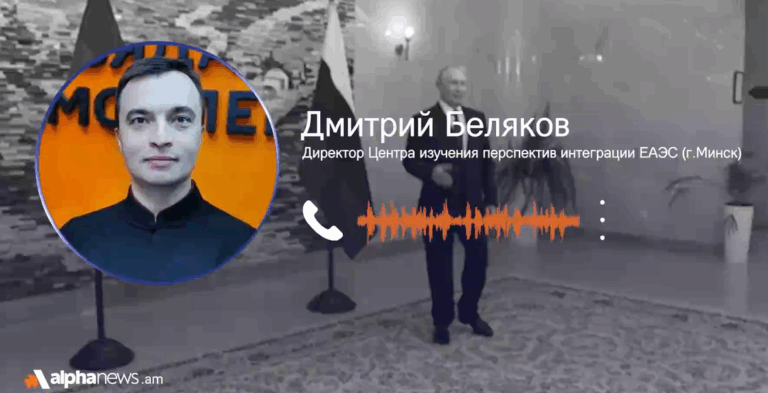
Dmitry Belyakov, director of the Center for the Study of EAEU Integration Prospects in Minsk, spoke to Alpha News about the foreign policy of Nikol Pashinyan, Armenia’s prime minister, his upcoming visits to Moscow and the outlook for Armenia’s continued participation in Eurasian integration structures.
“Pashinyan’s behavior in recent months does look ambivalent. On the one hand, he has announced three visits to Russia in December, on the 3rd, 11th and 22nd, and speaks of hoping to maintain a friendly atmosphere in relations with Moscow. On the other hand, in Dublin he says outright that he sees Armenia in the EU in 20 years’ time and plans to apply for membership in 2027–2028. At the same time, he himself admits that a country cannot be a member of both the EAEU and the EU. That admission is the core of the problem: Yerevan wants to keep the economic benefits of EAEU membership, but politically and strategically it is turning toward Brussels. This tactic looks like an attempt to reconcile the irreconcilable,” Belyakov said.
According to the expert, Moscow has already made it clear that it sees Yerevan’s EU ambitions as creating difficulties, including because of Armenia’s membership in the EAEU.
“Three visits to Moscow in one month signal that Pashinyan does not want economic ties to collapse and is trying to ease the Kremlin’s irritation. However, a friendly atmosphere hardly fits with Armenia’s de facto freeze of its participation in the CSTO, its absence from the Collective Security Council meeting and the loss of its voting rights in the organization. A report by Russia, Belarus, Kazakhstan and Kyrgyzstan predicts that if Armenia’s EAEU membership is suspended, its GDP will shrink by 15.6% and its trade with the union by more than 55%. These are not abstract risks; this is the price of uncertainty. Tactically, Pashinyan’s ambivalence is understandable: he is trying to keep as many economic preferences from the EAEU as possible without taking on allied obligations, while at the same time laying the legal and political groundwork for closer ties with the European Union.
But strategically, this is an unstable construction. The prime minister himself says the choice must be made by citizens, yet he is the one setting the course and creating expectations. A statement about a European future in 20 years and an EU application in 2027–2028 is not just an alternative but a clear direction. The only question is how long Moscow and Brussels will tolerate this ambiguity. In the end, Pashinyan is trying to pursue a policy with both Moscow and Brussels while himself admitting that it is logically impossible. The three December visits to Russia are more an attempt to buy time and soften the consequences than evidence of a strategic commitment to the EAEU. Sooner or later, Yerevan will have to make up its mind. The longer this ambivalence lasts, the higher the economic cost and the less trust Yerevan will have from both of its partners,” Belyakov concluded.
 Now live