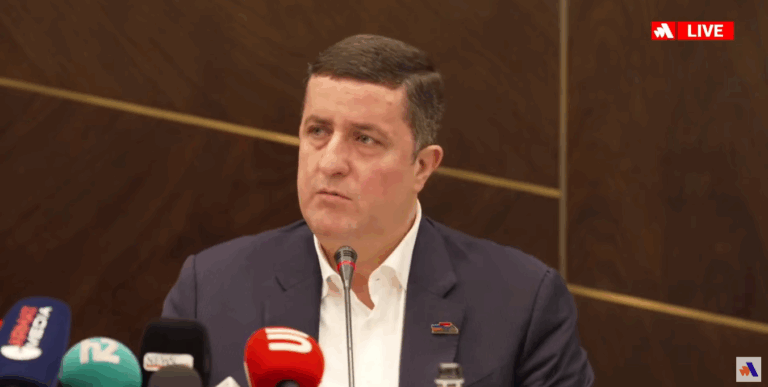

Armenia becoming servant of external powers – Alexey Anpilogov
Speaking with Alpha News, political scientist Alexey Anpilogov commented on the situation in Russian-Armenian relations.
“The current state of Armenian-Russian relations is, of course, far from ideal. We must understand that this trend has been clear for at least the past five years—a gradual cooling of ties, largely driven by Armenia. Since the rise of Pashinyan and his government, which resolves all issues through diplomatic channels and exerts control over them, there have been few positive glimpses of the future. Yes, there are certainly some positive aspects—no major confrontations have occurred, and high-level visits to Moscow continue. Both Moscow and Yerevan have common interests in the South Caucasus, but we must understand that the interpretation of these interests differs somewhat between the parties. Therefore, it can be said that Armenia is now, I’m not afraid to say it, gradually leaving Russia’s sphere of influence. Unfortunately, in doing so, it does not establish truly independent interests but instead risks becoming a vassal of external powers.
At the same time, calculations and reliance on these external forces, in my view, are quite reckless and repeat the same mistakes that Armenia made at the beginning of the 20th century, when it was moving away from Soviet Russia, but had rather phantom expectations regarding the role of, for example, the United States or European countries in the affairs of the South Caucasus,” the expert said.
According to Anpilogov, by distancing itself from Russia, Armenia is placing itself in a vulnerable position vis-à-vis its unfriendly neighbors.
“A contradiction is now emerging in diplomatic correspondence, in diplomatic work between countries, when Russia insists not only on upholding its own interests—this is understandable, it is the alpha and omega of any country’s diplomatic actions—but also warns Armenia against a rather short-sighted, reckless reliance on external centers of power, which are unlikely to support Armenia in any future conflicts, which, in my view, seem inevitable in the region, particularly between Armenia and Azerbaijan, and Armenia and Turkey. In such a situation, having cool, neutral relations with Russia is, of course, fatal for such a small country, especially one surrounded by its own geopolitical adversaries. I don’t want to use the word ‘enemy,’ since Armenia’s main rhetoric now is peace for all time, but it is clear to me that Azerbaijan and Turkey will remain Armenia’s adversaries, reasoning in categories incompatible with Armenian statehood. Therefore, this option of cooling diplomatic relations between Moscow and Yerevan looks like a losing bet,” he concluded.
 Now live