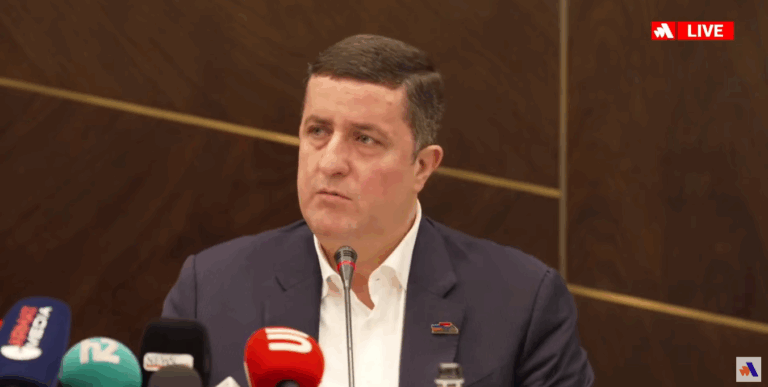

Armenia will not receive anything significant following US talks – Andrey Areshev
Speaking with Alpha News, Russian political scientist Andrey Areshev commented on the meeting between Pashinyan, Trump and Aliyev in the White House, US interests in the South Caucasus region and the goals of the ruling Civil Contract party ahead of the elections.
“Pashinyan, Trump and Aliyev are attempting to formalize the realities that emerged following the events in Nagorno-Karabakh. Their goal is to address key issues that the Trump administration has actively engaged with. The package of agreements—both bilateral and trilateral—has been in development for a long time. Work on these documents was carried out under previous administrations. Biden also tried to bring positions closer together, but an agreement could not be reached at the time. Regional transformations and armed conflicts contribute to the consolidation of new realities,” the expert said.
According to him, there is a fourth, invisible participant in these negotiations: Erdogan.
“As far as we can tell, the discussions involve opening the region to private and quasi-public international business interests. I believe Erdogan is the invisible fourth participant in these talks. His presence is implicit, because the idea of a transit corridor through Syunik is not only an Azerbaijani initiative but also a long-standing Turkish ambition—even before Erdogan himself. Let’s recall the Gobble Plan from the 1990s: the first version appeared early in the decade, and the second toward its end. The second, by the way, included the revision of the border of Armenia with Iran. How this issue will be resolved now is a big question. There is a wide field for interpretation here. The very fact of a new structure on Iran’s northwestern border is particularly noteworthy,” Areshev said.
According to Areshev, the United States is seeking to establish strategic footholds in an effort to keep up with China’s expansion.
“Americans are striving to keep up with China’s expansion, including in the Caucasus. As part of the Belt and Road Initiative, China is implementing major logistical projects in Azerbaijan and Georgia. Against this backdrop, the US is working to secure its presence in strategically important locations, driven by growing tensions with Beijing—not only over Taiwan, but across the entire Eurasian region,” the political scientist concluded.
 Now live