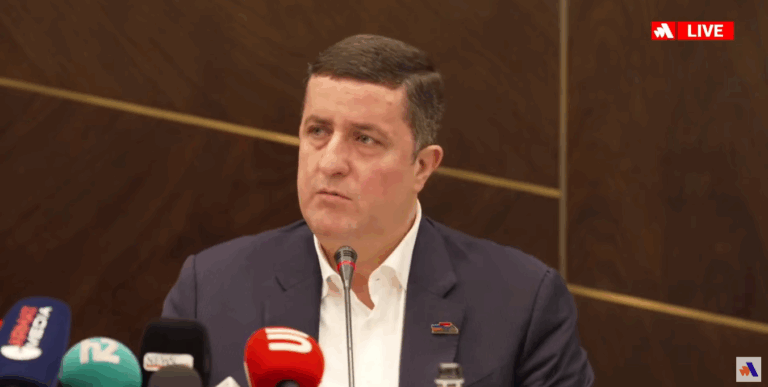

If it is about EU assistance in elections, then such elections are inherently undemocratic – Alexey Leonkov
Speaking with Alpha News, military analyst Alexey Leonkov commented on the statement made by EU foreign policy chief Kaja Kallas about the European Union’s intention to help Armenia in the upcoming 2026 elections.
“Kaja Kallas mentioned Moldova for a reason. Maia Sandu—who is not supported by the majority of the population—won the elections thanks to some votes from abroad that no one can properly count. Progressive forces were striving for power, wanting to make Moldova a neutral country in relation to the plans unfolding around it. Well, EU assistance ensured that Sandu remained in power. I believe now processes are underway in Armenia that allow for choosing a different path of further development.
The current administration, if we can call it that, wants to preserve its power. Therefore, if we are talking about EU assistance in elections, one can assume that such elections will be inherently undemocratic, and so-called political technologies will be used. And we will see who wins through those technologies. I think the post of prime minister will soon become irremovable,” the expert noted.
According to Leonkov, Russia and Iran have interests in the South Caucasus dictated by the security of their borders.
“I think the issue of the Transcaucasia is still open. Russia’s national interests extend to the Transcaucasia, and Russia is interested in ensuring stability there. At the same time, it respects, of course, the choice of the Armenian people, if that choice is honest and not falsified. In this matter, Russia’s closest ally, Iran, is also interested, as it wants everything to remain calm on its northern borders. Therefore, naturally, the desire of Russia and Iran will be met with hostility from the European Union, which has now taken a course toward preparing for war with Russia. They do not even hide it. They speak about it publicly, expressing all their unfriendly feelings—or rather, hostile feelings—toward Russia,” Leonkov concluded.
 Now live