
It is important to reach agreement not only with Trump but also with American elites – Alexander Shatilov
December 09 2025, 10:57
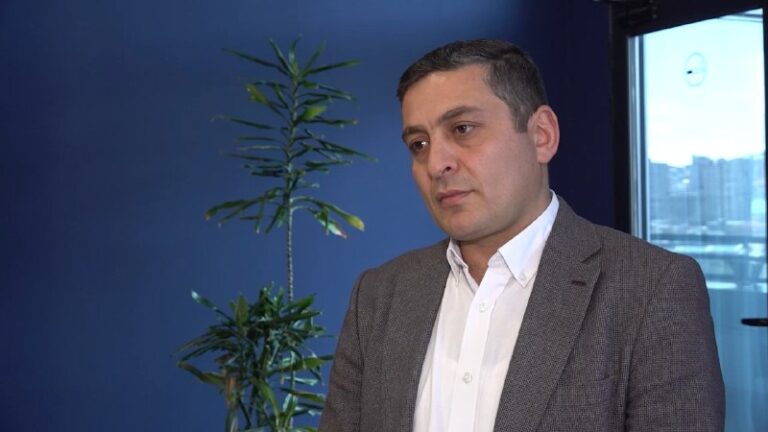
Political scientist Alexander Shatilov spoke to Alpha News about the recent negotiations in Moscow between US President Donald Trump’s special envoy, Steve Witkoff, and Russian President Vladimir Putin.
“Putin’s negotiations with the US special representative Witkoff turned out to be very lengthy—five hours of discussion, which I believe were more than substantive. On the other hand, they seem to have concluded with certain bilateral agreements, which are not being disclosed, but may represent a coordination of positions on a number of issues. Here, in my opinion, the ‘spirit of Anchorage’ is indeed preserved, and we can even see this in Trump’s statements following the talks. Another matter is that a number of positions, even American ones—not to mention European—raise certain doubts for Russia, and in some cases outright rejection. Russia wants very reliable and legally binding guarantees of the post-war reality and of its role in that reality. This concerns not only territorial issues, but also Russia’s return to the global economy, the lifting of sanctions, and, in general, Russia’s integration as one of the leading actors in the global agenda. Here it is not always possible to find common ground even with the Americans. Although, for example, Trump himself, in my view, is ready to concede Ukrainian territories to stop the conflict—unlike the Europeans, who believe Ukraine can still be used as an anti-Russian tool to pressure Moscow, and that it is too early, as they say, to surrender it or bargain away its territories. In this regard, of course, the Europeans take a much tougher, uncompromising, and even aggressive stance toward Russia, which largely undermines the agreements between Russia and America,” the expert said.
According to Shatilov, negotiations with the United States must involve dialogue not only with the president of that country but also with the influential circles behind him.
“It should be understood that Trump’s position in the US is not entirely stable. He is being pressured from all sides by opponents, his level of trust among the electorate is not absolute—in fact, it is even negative—and it is unclear what will happen in the future. Therefore, it is important to reach agreements not only with Trump himself, but also with the American elites, firmly and for the long term. That too is a big challenge. Therefore, I think these issues were raised with Witkoff and Kushner. And they flew back to sort out such contradictions—both within the American elites and in relation to Europe,” Shatilov concluded.
 Now live