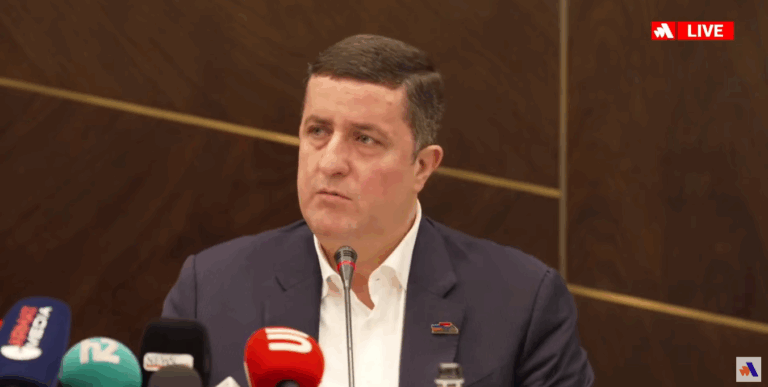

‘It was a snub directed at Erdogan’: Alexander Tsinker on Netanyahu’s remarks on Armenian Genocide
August 29 2025, 10:15
Speaking with Alpha News, Alexander Tsinker, head of the International Center for Eurasian Studies (ICES), commented on Israeli Prime Minister Benjamin Netanyahu’s remarks regarding the Armenian Genocide, as well as Azerbaijani President Ilham Aliyev’s suggestion to withdraw the Russian military base from Armenia.
“I am, frankly speaking, very surprised by the interest and attention that the media in Israel, Armenia and many countries paid to this statement—it is rather incomprehensible and awkward. We have been at war for two years now, so these issues are not on the agenda now. When he was asked a question, he had to answer something—he was clearly not ready for it. I do not think that this was a deliberate strategy prepared by Prime Minister Netanyahu for this interview, which focused on entirely different topics. But it was a snub directed at Erdogan. While the war in the Gaza Strip is going on, Turkey has become the leader of the fight against Israel, putting forward initiatives to ban Israel from participating in the UN General Assembly and to close ports to Israeli ships. And Netanyahu took advantage of the moment to strike Turkey at one of its most sensitive points—by invoking the Armenian Genocide.
I really do not like it when historical facts are used in some kind of political game. The genocide must be recognized because it happened, and not because of bad or good relations with Turkey,” Tsinker said.
“The situation in the South Caucasus is changing now: a peace agreement has not yet been signed, a preliminary one is in place, which could lead to a full treaty. As relations between countries change, Israel should adopt a more balanced approach in the region. If Armenia and Azerbaijan do sign a peace treaty, why shouldn’t Israel pay more attention to expanding ties with Armenia? When it comes to Israel’s foreign policy priorities, recognizing the Armenian Genocide is not currently among the top issues,” Tsinker noted.
 Now live