
Losing Russia as an ally could prove fatal for Armenia: Dmitry Suslov
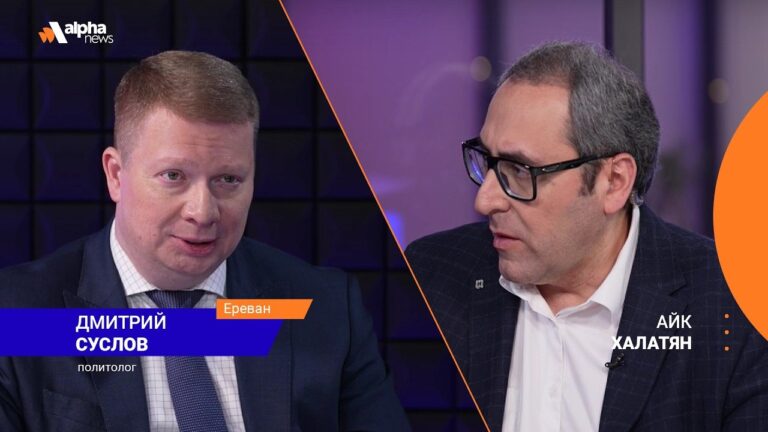
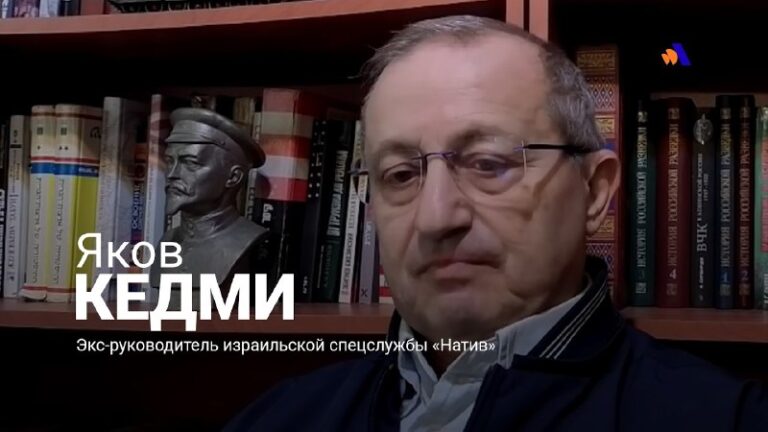
Dmitry Suslov, Deputy Director of the Center for Comprehensive European and International Studies at the HSE University Faculty of World Economy and World Politics, and Deputy Director of Research Programs at the Council on Foreign and Defense Policy, commented live on Alpha News on aspects of Russian–Armenian relations.
“In a pre-election situation, it would be strange to expect any other assessment of the talks from Pashinyan. For him, the visit was electoral in nature, and he declared it a success. But it was successful only insofar as it honestly laid out the problematic aspects of Russian–Armenian relations. Russia made it clear that the current status quo does not suit it, and that Armenia needs to define the format of the relationship. Armenia has officially proclaimed EU membership a strategic goal and is step by step reducing its ties with Russia, maintaining them only to the extent that it must. That is precisely what came through in the talks,” the political analyst stressed.
According to Suslov, if after the elections the new leadership continues on the current path of disintegration, Moscow will take retaliatory steps.
“Russia will pay attention above all to actions. What matters most is what policy the Armenian leadership pursues after the elections. If it preserves the alliance and strategic partnership with Russia, halts the dismantling of relations, and stops squeezing out Russian business, Russia will engage and welcome such a course. But if the new leadership continues on the current path of disintegration, Moscow will take retaliatory steps. This was stated very clearly at the Kremlin,” Suslov noted.
As the expert observed, the Moldovan scenario means a voluntary renunciation of sovereignty and statehood, and the comparison with Moldova is an insult to the Armenian people.
“From Russia’s point of view, talk of a Moldovan scenario is offensive to Armenia. The Moldovan scenario means a voluntary renunciation of sovereignty and statehood. Moldova’s current president openly states that she wants the country to cease to exist as a state, framing this as protecting sovereignty by joining another state, even though Russia poses no threat to Moldova. Moreover, the majority of citizens do not support the current leadership’s course, and for Russia this stands as an example of undemocratic governance and the voluntary surrender of one’s country in the interests of a Europe waging hybrid war against Russia. Such an outcome would be extremely unfavorable for Armenia, and that is why the comparison with Moldova is offensive to the Armenian people,” said Dmitry Suslov.
According to the political analyst, Armenia is in effect moving along the Moldovan or Ukrainian scenario, which does not serve its interests.
“Armenia does not want to sever all ties with Russia in one stroke. This is evident from the current government’s policy: participation in the CSTO has been frozen, but withdrawal from the EAEU has not been carried out. EU membership has been proclaimed as a goal, while the question of the incompatibility of the EU and the EAEU has been deferred for later. The same applies to the Russian military base in Armenia, a decision has been postponed. This amounts to risk hedging: using relations with Russia as an insurance instrument while steering toward closer ties with Russia’s geopolitical adversary. Russia is not satisfied with this status quo. Armenia is in effect moving along the Moldovan or Ukrainian scenario, that is a course toward joining structures that are waging war against Russia, and toward turning Armenia into an instrument of that war. In my view, this does not serve Armenia’s interests. Europe, the United States, and Armenia’s nearest neighbors, Azerbaijan and Turkey, will provide no security guarantees. Therefore, losing Russia as an ally and security guarantor could have fatal consequences for Armenia,” the expert stressed.
 Now live