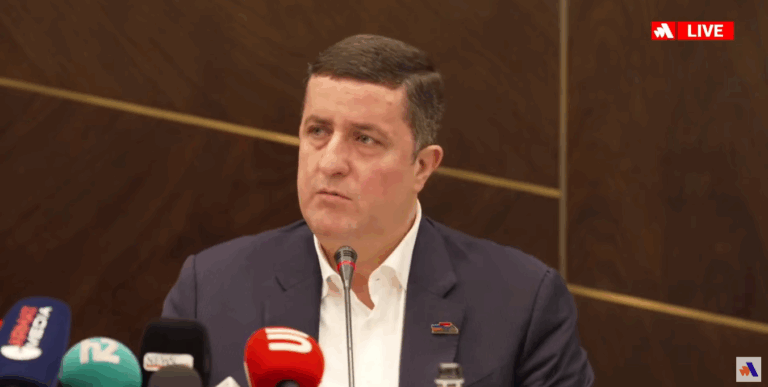

Most important thing for Armenia is to preserve sovereignty over this territory – Igor Semenovsky
Speaking with Alpha News, political scientist Igor Semenovsky commented on the meeting between the leaders of Armenia and Azerbaijan in Washington, where a peace treaty was initialed in the presence of US President Donald Trump.
“At that very meeting in Washington, the parties refrained from assessments. Even the ‘Zangezur corridor’ was referred to by various names—’Trump Route’ or ‘Trump Road.’ This was done to please the hosts, create a favorable atmosphere and, of course, promote themselves in the presence of one of the world’s influential leaders. It seemed like a nice political gesture—suggesting that the fighting was coming to an end. But it’s important to understand: the concept of the ‘Trump Route’ remains extremely vague. The most important thing Armenia must preserve is sovereignty over this territory. Control must exist both at the entrance and exit of this route,” Semenovsky said.
According to him, the draft agreement between Armenia and Azerbaijan contains numerous reference documents and norms, the coordination of which will be extremely difficult.
“Russia certainly welcomes the possibility of a peace agreement and the resolution of conflict in the South Caucasus—this is one of its priorities. But it’s important to understand the conditions under which this will occur. Will foreign structures and private military companies be involved, or will it become a free zone? All of this is possible, especially given Armenia’s membership in the EAEU. From an analytical perspective, free transit without any oversight poses problems for the EU, particularly due to the existence of the Customs Union. Therefore, the question arises: who will oversee this process? Armenian border guards should be involved, as should representatives of EAEU countries participating in these procedures.
According to the trilateral declaration of the leaders of Russia, Armenia, and Azerbaijan, control in this territory was carried out by the border service of the Russian FSB. Now we see that this trend may change. But who will oversee the process is still completely unclear. This is the bottleneck in current or even preliminary agreements. They cannot be considered full-fledged treaties. It must be kept in mind: a peace treaty is still only a preliminary intention. The draft agreement between Armenia and Azerbaijan, which was published, contains numerous reference documents and norms, the coordination of which in the future will be extremely difficult,” the expert noted.
 Now live