
Pashinyan’s war rhetoric is an attempt to pressure society: Andrei Perla
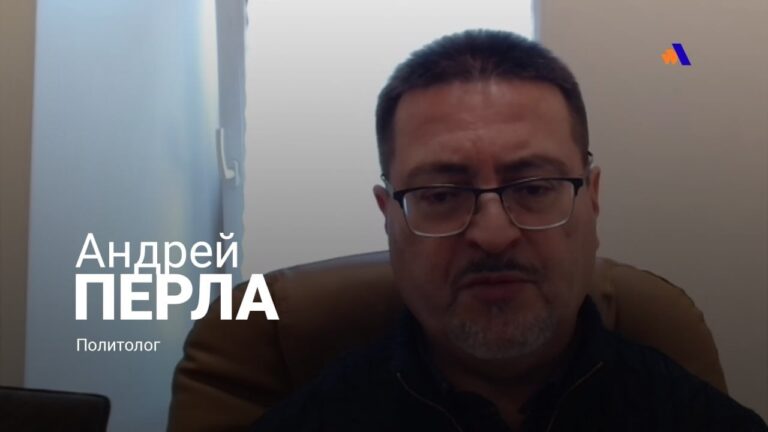
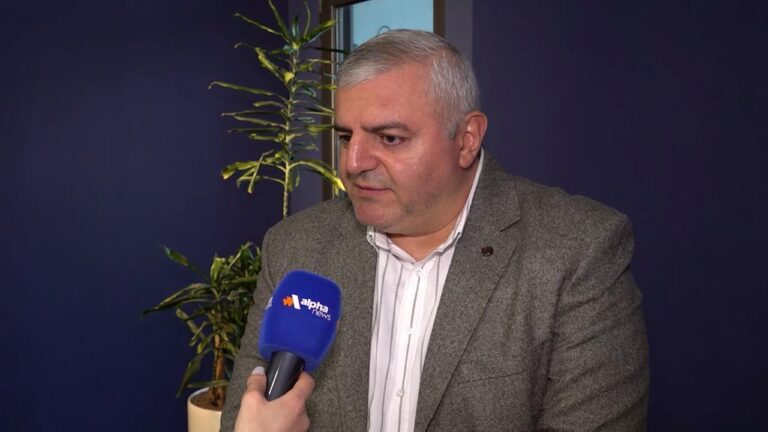
Political analyst Andrey Perla commented to Alpha News on the pre-election strategy of Nikol Pashinyan and Armenia’s foreign policy.
“I think Pashinyan’s pre-election strategy is built on somewhat unusual assumptions. He believes that Armenian society is very tired of confrontation and primarily wants a peaceful life. He assumes that the Armenian public is sufficiently resentful of Russia to justify distancing from it, and he believes that direct threats of renewed hostilities will have a nearly hypnotic effect on the Armenian people. Overall, it seems to me that this strategy is flawed – it won’t win him more votes than he already has. At best, he can probably count on about a quarter of Armenia’s population,” Perla said.
According to the expert, the current course of the Armenian leadership is based on a reinterpretation of history and statehood.
“Pashinyan operates within a fully conscious and well-honed ideology. His ideology of ‘real Armenia’ assumes that historical values do not matter; the country’s and the nation’s history means nothing – nothing before the start of his rule matters. Hence his constant attempts to promote a multivector approach, asserting that Armenia should depend in small part on several major powers – naturally putting Turkey and Azerbaijan at the forefront.
To live peacefully, a country must avoid conflicts and be considered safe. And for that reason, Armenia’s Declaration of Independence – which does not merely mention Karabakh, but states that Armenia is Armenia with Karabakh – is completely unacceptable to him. It implies a responsibility to defend the people, the land, and the nation, rather than being a small Eastern state that trades a little and has some tourist appeal,” Perla noted.
Perla also emphasized that Armenia’s ties with Russia have deep historical and economic foundations that cannot be ignored.
“Russia regards Armenia as one of its closest partners, alongside countries like Belarus, Kazakhstan, and Kyrgyzstan. For Russia, Armenia is a very close country for multiple reasons: historical connection, shared history, and the presence of a large Armenian population in Russia, over a million, perhaps 1.5 million or more, as well as a shared Christian cultural heritage. All these factors make Russia treat Armenia differently than other friendly countries. Pashinyan may resist this and dislike it, but 60% of Armenia’s GDP exists because of economic ties with Russia.
At the same time, it is important to understand that Russia needs Armenia. Russia wants Armenia as an outpost in the South Caucasus. This is no joke. Russia considers it essential to have a friendly state on the borders of Turkey, Azerbaijan, and Iran, which also serves as part of Russia’s presence in the region. Pashinyan’s desire for Armenia to become a European country, meaning part of the EU, is not realistic – it’s a dream. The EU has no borders with Armenia and never will. Technically, the EU cannot have the same scale of economic ties with Armenia as Russia already does. Any attempt to replace Russia with the EU or the US is a doomed endeavor, which cannot yield positive results, no matter how it is justified,” Perla concluded.
 Now live