
Political polarization in Armenia damages country’s image before EU and European Parliament – MEP
December 11 2025, 13:30
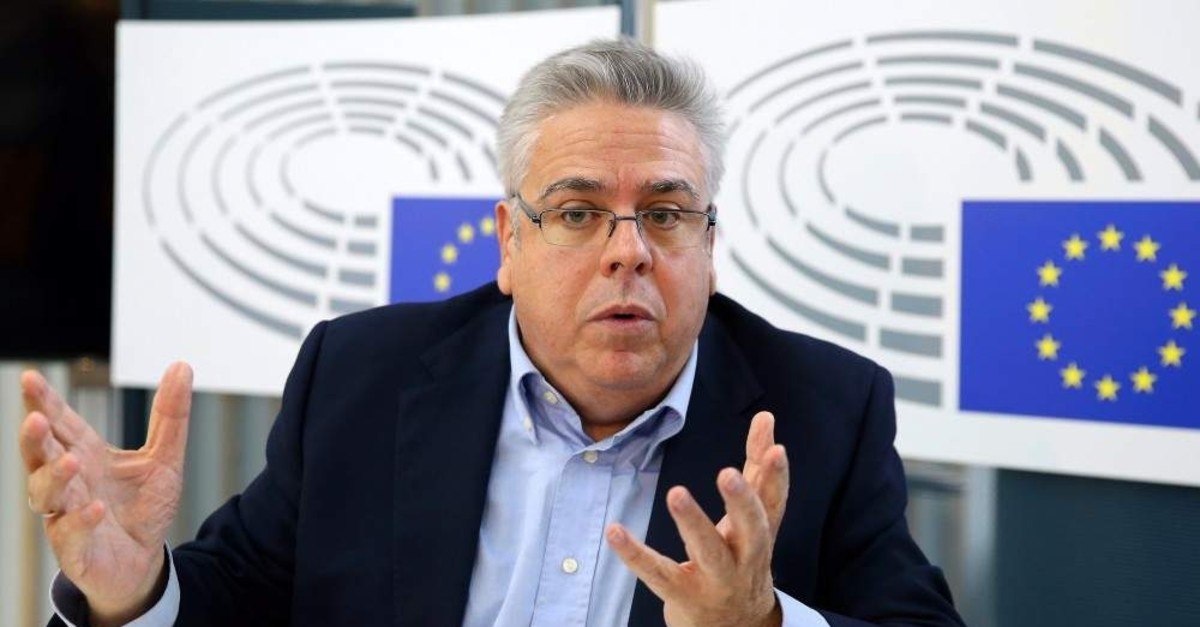
Alpha News interviewed Spanish MEP Nacho Sánchez Amor.
You were in Yerevan as part of the Euronest session. How would you assess the human rights situation in Armenia, particularly regarding political prisoners, especially given the deepening relations with the European Union?
Yes, you are right. This is a good moment in the relation between the European Union and Armenia. Armenia expressed clearly that it wants to open the foreign policy to new partners and to new perspectives, and this is excellent, because the European Union wants to have partners everywhere. And Armenia, after what is happening in Georgia, is playing a role in the area and could be a very reliable partner. My agenda in Yerevan was linked to my new role as a lead member for Armenia in the unity of the European Union devoted to the promotion of democracy and election observations.
However, my visit has nothing to do with election observations. This is another issue. But the lead member on behalf of the European Parliament tries to overcome some situation of polarization, and this is unlikely the current situation. Among the political forces, there is a lot of polarization. I met the relevant parties, because my scope is mainly the Parliament and the parliamentary groups, and incidentally the political parties. Then I met the leaders of the groups, I met the Secretary General of the Parliament, with the idea of collaborating on two levels. In a technical level: exchanges of expertise, sending people there or receiving people from the European Parliament.
And the political level was more devoted to try to help to create a conducive environment among the political forces. We concluded, every interlocutor said, we are ready to engage in this program of the European Union, trying to create a good environment among political forces. What I did in Euronest is not a kind of warning specifically for Armenia. My reflection was that whatever is the appetite of the European Union or a country to create closer bonds, the rapprochement with the European Union has to do with the level of democratic standards in the country. Your country is a democracy, but there are some signals of this polarization. It could be damaging the image of the country before the European Union and before the European Parliament. And my advice was to take care of this part of the domestic politics in the country, because it is also about keeping the democratic standards in a level compatible with the standards of the European Union. And this was the part of my speech in Euronest.
But I repeat, the focus is that the country and the political forces have to be aware that rapprochement with the European Union means to be able to be scrutinized from the point of view of the democratic standards. And then you have to be aware of that and try to be careful, because any kind of problem in that part could create a bad impression in the European Union.
For example, the question arises: can it be considered a democratic standard when a person is persecuted or imprisoned for expressing their own opinion on social media?
We keep in Europe a very high standard regarding freedom of expression. I don’t know the particular case, but it’s very worrying if the only grounds to prosecute somebody is simply to express freely on social media. Sometimes on social media or in any written statement, the line of the criminal code could be trespassed, but normally, if somebody is not asking for some violent activities, we have to be aware that the European Union standards allow an enormous margin to express political views through your social media, or whatever other means, and this is our standard.
We are having a lot of criticism, and if the criticism is criticism, it’s not in any way could be prosecuted criminally. And this is the thing that you have to be aware of and try to maintain the standards. And there is a very clear compass, it’s the European Court of Human Rights. And the European Court of Human Rights has a long jurisprudence about what could be considered legitimate criticism, and what could be considered a criminal activity. And I think the most secure guide to act in any country, being part of the Council of Europe, is following the jurisprudence of the European Court of Human Rights, and this clearly defines what is freedom of expression, and what could be eventually a criminal liability.
How can the EU or the European Parliament influence the authorities of a country in these matters?
Well, we have close relations, and we talk freely, and I think this is the way. I’m sure the ambassador and the European Union representation in the country are doing their job regarding expressing to the authorities what the European Union hopes for the country. But in my role as a lead member dealing with Armenia, together with my colleagues—including Miriam Lexmann, the rapporteur, and others engaged with your country—we want to help the country to continue this path of rapprochement with the European Union, and this is a good step that we appreciate a lot. And we only have to underline in which way we see the country, in which steps we would like to see in the country to continue this path.
The European Parliament has already adopted several resolutions on the situation in Nagorno-Karabakh, including those concerning the right of refugees to safe and voluntary return. This right is enshrined in international law, and no one – including the government of Armenia – can decide this issue on their behalf. Do you believe that these people still retain this right?
I think the rights of the people who have been expelled from Nagorno-Karabakh are clearly stated in the international law, meaning they have to use and probably they have to encounter the way to have this right effectively protected by international bodies. My concern is what is happening in Baku with this procedure against some Armenian officials and people who held responsibilities in Nagorno-Karabakh, because after the withdrawal or the expulsion of the Red Cross, I’m not sure about what was the real thing. The problem is there are no, apparently, international observers, and my request has been that somebody has to have a look on the process, because if I understood well this Friday, the 27th, there is another hearing, and I would like to have some representatives of the international community, European Union, European Union members, whatever other international body, to take care of this process that has been following in a military court, with a lot of restrictions on the normal rights of the people to defend. The Azerbaijani authorities say there are no political prisoners, there are no prisoners of war, but they have been judged in a military court, and that means this is not a normal thing. You have to judge a civilian following the normal procedure of civilian or criminal courts. The fact that they have been judging in the military court is concerning.
 Now live