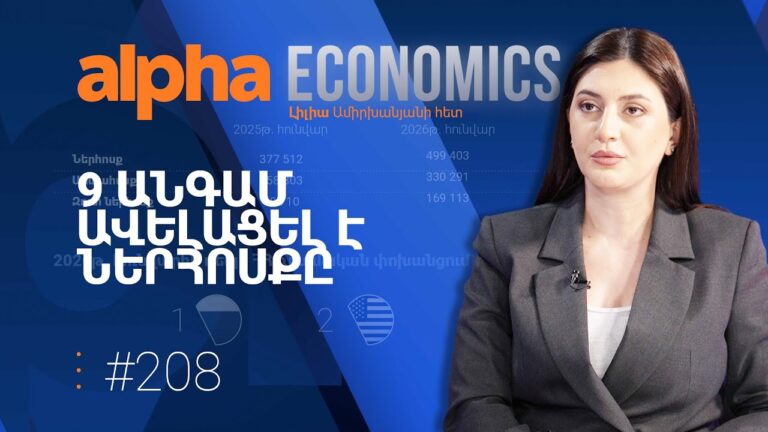

From which countries have remittances to Armenia increased?
March 25 2026, 18:00
Total remittances to Armenia in January of this year reached $499.4 million, up from $377.5 million in January 2025 which is an increase of approximately $12.9 million, or roughly 32%. Net inflows also rose significantly, with inflows running nearly nine times higher than outflows, meaning the amount of money transferred to Armenia and retained in the country was nine times greater than the same period last year.
Non-commercial remittances, defined as gratuitous transfers from abroad, including donations, pensions, benefits, and wages received from foreign sources, or in simpler terms, consumer-use funds, also posted strong growth, rising 43.7% compared to January of last year. This surge was driven largely by increased flows from the Russian Federation, with the United States contributing a more modest gain of 7.6%.
Russia topped the rankings for overall remittance volumes to Armenia in January, as it typically does, followed by the United States and the United Kingdom. Russia was also the undisputed leader in net inflows, particularly in non-commercial remittances.
Private remittances carry considerable economic and social weight. As “live money” flowing directly into the economy, they serve as a driver of consumer demand, a catalyst for the development of the financial and banking sector, and one of the country’s primary sources of foreign currency. Their social significance is even greater for households where such transfers represent either the sole source of income or a critical supplement to living standards.
The high degree of dependence on remittances does, of course, carry its own risks which is a challenge that will need to be addressed over the long term. Yet it is troubling to contemplate a scenario in which these flows from major source countries, particularly Russia, were to dry up sharply due to unforeseen circumstances. Gradually reducing this dependence by growing the capacity and productivity of the domestic economy is a desirable long-term goal. However, a sudden shift brought about by an anti-Russian foreign policy stance would risk triggering serious social instability.
This raises a legitimate question: have the consequences of such scenarios been carefully calculated, and have adequate mechanisms been developed to address potential social fallout within the framework of current foreign policy? Does Armenia posess a sufficient level of resilience? These are objective, multifaceted questions that deserve honest answers regardless of anyone’s geopolitical preferences.
 Now live