
Russia has never had normal relations with Azerbaijan – Aslan Rubayev
November 29 2025, 11:30
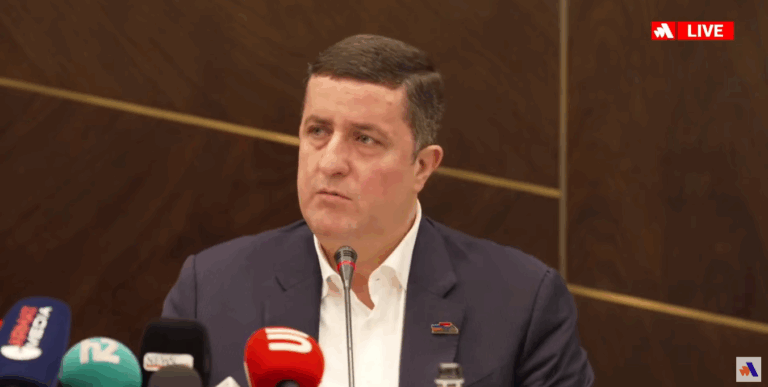
Speaking with Alpha News, political scientist and expert on post-Soviet countries Aslan Rubayev commented on the changes to the Armenian Constitution, the standoff between the Church and the government, and current relations between Russia and Azerbaijan.
According to the expert, the new Constitution of Armenia is aligned with pro-Turkish, pro-Azerbaijani, and pro-Western views, but not pro-Armenian ones.
“Armenia must take to the streets as a whole nation and reject this Constitution. It must be adopted only by referendum, and Armenians must boycott this referendum. Under no circumstances should a Constitution be adopted that does not meet Armenia’s national interests. And the new Constitution, by all appearances, will not: it is aligned with pro-Turkish, pro-Azerbaijani, and pro-Western views, but not pro-Armenian ones. Pashinyan is not fulfilling Armenia’s national responsibilities. He is fulfilling orders. He is transforming Armenia into an area that is, on the one hand, anti-Russian, on the other, anti-Armenian, on the third, pro-Azerbaijani, and on the fourth, pro-Turkish. But in no way pro-Armenian. We cannot know the substantive content of the new Constitution of Armenia, but it will certainly enshrine new provisions for foreign policy cooperation.
Most likely, it will signal a reorientation: withdrawal from the CSTO, the announcement of new allies as Armenia seeks to diversify its foreign policy. Perhaps a final renunciation of territories. Perhaps a limitation on the number of Armenian troops, a non-aligned status. The same thing Russia is trying to do with Ukraine. Turkey and Azerbaijan are trying to reduce Armenia to a state incapable of taking revenge. Russia has a truly Nazi entity right next door. Armenia is not a Nazi entity. Armenia is simply not needed as a state by either Azerbaijan or Turkey. And here the question is about the final solution to the Armenian question: Armenians must become, like the Jews once were, a dispersed people, without land, territory, or a sense of self-identity. This is Turkey’s task. Turkey today wants to dismantle Armenia as a state. Why Pashinyan is doing this is unclear. Armenia is now losing the remnants of its sovereignty, losing its ancestral territory, losing its army, losing young people in senseless wars that could have been ended with victory and very quickly. All this confuses me. Why change a Constitution that already serves Armenia’s interests is beyond me,” Rubayev said.
According to the political scientist, today the Armenian Church takes a pro-Armenian position and defends national interests, while the current leadership of Armenia does not.
Addressing relations between Russia and Azerbaijan, the political scientist noted that Russia could never call Azerbaijan a good comrade, friend, or reliable partner.
“We have never had normal relations with Azerbaijan. I don’t recall ever calling Azerbaijan a good comrade, a friend, or a reliable partner. Never. It has always been a relationship that benefited Azerbaijan. Russia sacrificed a lot to support Baku, but Azerbaijan has never once proven itself to be a strategic partner. Let me remind you: Azerbaijan provided its airspace for strikes against our friend Iran. Azerbaijan committed aggression against our friend and partner, Armenia. Let me also remind you of Aliyev’s position on Ukraine. While Moscow tried to resolve the Armenian-Azerbaijani conflict by consensus, Aliyev demonstrated that he did not need relations with Moscow.
As we said earlier, Armenia is controlled from the outside, and so is Azerbaijan—by Israel, Turkey, and partly by the US Democratic Party, which supports Aliyev. Britain could also be added. Azerbaijan is a tool. Just as the US uses NATO to control continental Europe and confront Russia, Azerbaijan today is a tool for consolidating foreign interests in the South Caucasus.
They are also trying to turn Armenia into a tool because it is profitable: it offers money, the North-South corridor, and key infrastructure routes. It is a tool for pressuring Russia, Iran, and possibly Turkey, given the current tensions between Israel and Turkey. Azerbaijan’s foreign policy is unstable. Sooner or later, the time will come when Azerbaijan will have to make a decision. But it will already have such a reputation that no one will want to have anything to do with it. Russian experts—both at the grassroots level and in high places—understand this. And Russia will choose a different form of interaction with Azerbaijan,” Rubayev concluded.
 Now live