
Armenia’s destructive course toward Russia will continue: Alexander Semchenko
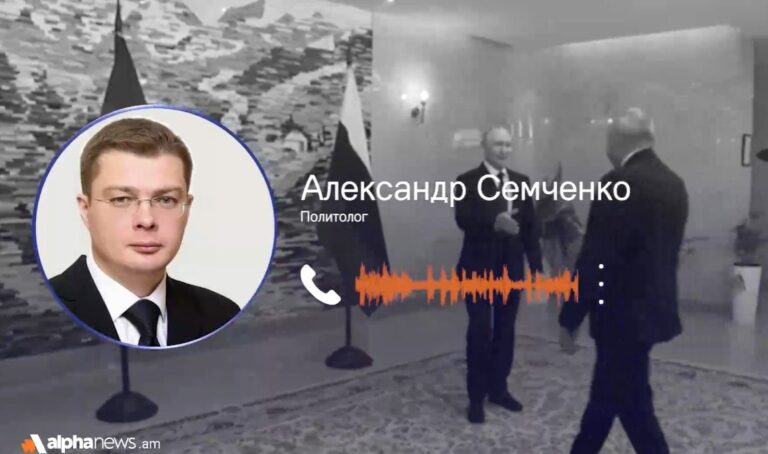
Alexander Semchenko, political scientist, speaking with Alpha News, assessed the prospects for Russian-Armenian dialogue ahead of the upcoming meeting between Vladimir Putin and Nikol Pashinyan.
In the expert’s view, the upcoming meeting between Vladimir Putin and Nikol Pashinyan is unlikely to change the Armenian leadership’s course in relations with Russia.
“I don’t expect anything good from Pashinyan. Pashinyan might promise something, he might even get some additional concessions from Putin on the gas issue, on access for Armenian goods to the Russian market, or on Russian goods entering Armenia on preferential terms. But his destructive course in relations with Russia won’t change. He wasn’t put in place to build relations with Russia. He doesn’t work in the interests of the Armenian people, he works in the interests of financial-industrial groups based outside Armenia and Russia, and the interests of those groups haven’t changed. Accordingly, Pashinyan’s real position won’t change either,” Semchenko said.
According to the expert, Armenia has effectively stopped being an ally of Russia, despite formal membership in the CSTO and the official-level preservation of allied relations.
“Even though Russia and Armenia are formal allies within the CSTO, there are already very serious questions about Armenia possibly withdrawing from the CSTO. In any case, even without leaving the CSTO, it is not, in substance, an ally of Russia. This shows, for example, in Armenia’s position on the Ukraine issue. The way Zelensky was received in Yerevan, well, you don’t receive your ally’s adversary that way, it just doesn’t happen.
Putin will show loyalty toward Armenia, and he won’t need to play any kind of role in doing so. He’ll simply say and do what he thinks and what he feels. But he keeps running into a brick wall. It’s probably even hard for Putin to understand how someone can act against the interests of their own people while serving as head of government,” Semchenko concluded.
 Now live