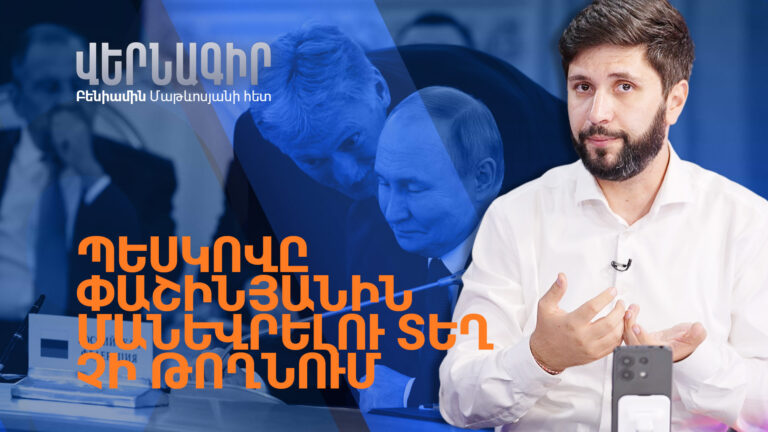

Beniamin Matevosyan: Peskov leaves Pashinyan no time to maneuver
September 25 2026, 12:00
(When will the leaders of Armenia and Russia meet?)
The statement by Dmitry Peskov, Press Secretary of the President of Russia, about the upcoming visit of Nikol Pashinyan, Prime Minister of Armenia, to Moscow has become another important marker of a new phase in relations between the two states. Pashinyan likes to repeat that Armenia’s relations with Russia have “changed since the end of the conflict,” and it appears that Yerevan has indeed achieved these changes.
Although exact dates for the meeting have not yet been officially confirmed, the very fact that the question of contact with Pashinyan remains constantly on Russia’s information agenda indicates a high degree of tension in bilateral relations. The Kremlin is thereby making it de facto clear that the space for Yerevan’s traditional geopolitical maneuvering is shrinking rapidly. The period of uncertainty is coming to an end, and in the very near future the Armenian leadership will have to give exhaustive answers to key questions concerning the country’s strategic direction of development. First and foremost, this concerns a final determination of its position on integration within the EAEU alongside the parallel process of rapprochement with the European Union, including the prospects for a corresponding referendum and the fate of legislative initiatives on European integration.
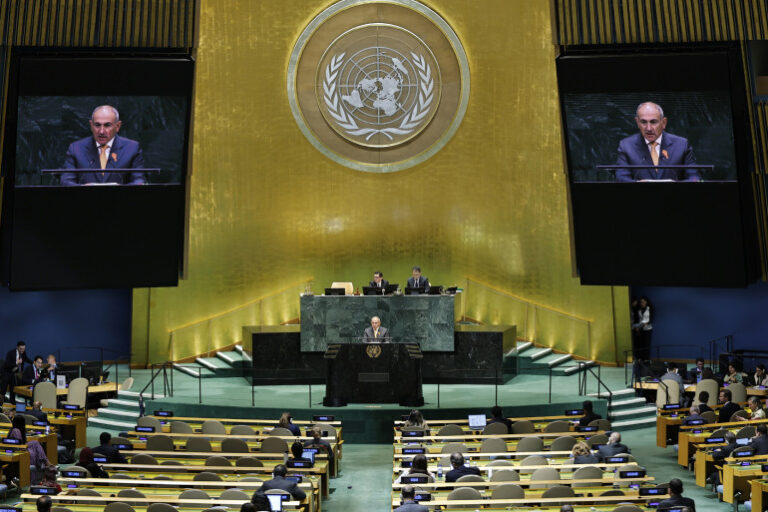
An indication of how seriously Moscow views these developments is the heightened activity of Russian state media. The attention of leading Russian outlets’ journalists to Pashinyan during his time at the UN General Assembly in New York was far from accidental. Pointed questions about “attempts to sit on two chairs” reflect the general position of the Russian state apparatus. Behind-the-scenes conversations with the Armenian premier have turned into a public test of Yerevan’s political intentions.
It appears that a very significant part of Russia’s media and diplomatic machinery is now focused on the Armenian issue, and this can mean only one thing: the moment for making fundamental decisions on revising or maintaining the country’s foreign policy course will arrive much sooner than the Armenian authorities would like.
Pashinyan himself categorically rejects the metaphor of “sitting on two chairs,” insisting that the Armenian leadership firmly occupies a single chair — the Armenian one (it would be more accurate to say the Turkish one, but in this case we are going by Pashinyan’s own statements). According to his version, expanding contacts with Brussels and other geopolitical centers fits entirely within the concept of a balanced and diversified foreign policy.
However, Yerevan’s diplomatic formulations about its intention to deepen fraternal relations with Russia, set against the parallel enshrining in law of a move toward the EU, look increasingly unconvincing to the Kremlin. Although Moscow formally declares respect for Armenia’s sovereign choice, it simultaneously reminds Yerevan of the objective obligations stemming from the country’s EAEU membership. Mutually exclusive vectors of economic and political integration confront Yerevan with an inevitable hard choice that can no longer be postponed indefinitely.
The Armenian side’s arguments that the transformation of ties with Russia is driven by objective changes in the region and a diminishing share of security issues on the overall agenda run up against the pragmatic approach of Vladimir Putin, President of Russia. Russia is not prepared to accept the concept of diversification if it leads to the actual erosion of existing allied and economic mechanisms, and to Russia’s detriment at that.
The upcoming meeting between the leaders of the two countries in Moscow, preparations for which are underway amid mounting informational pressure, promises to be a turning point. Pashinyan will have to either affirm his commitment to key integration projects within the CIS space or openly take responsibility for a shift in geopolitical direction, with all the consequences that follow — from economic to military-political.
Something to think about…
 Now live