
US no longer seeks to preserve its status as global hegemon: Timofey Bordachev
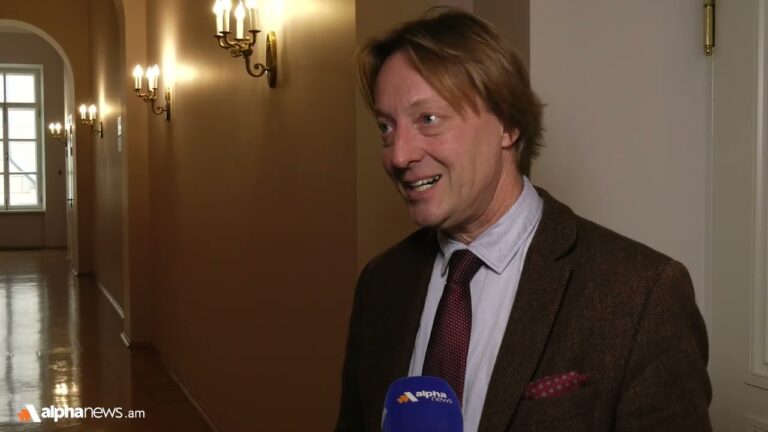
Timofey Bordachev, program director of the Valdai Club and academic supervisor of the Center for Comprehensive European and International Studies (CCEIS) at the HSE University, commented to Alpha News on the sidelines of the international scientific and practical conference marking the 20th anniversary of the CCEIS, “Russia and the new multipolarity: from idea to reality.” He spoke about the role of the US in the emerging multipolar world and the possibility of forming a new world order without a world war.
“I don’t think they are trying to preserve their status as some kind of global hegemon. They are fighting for the future. They are fighting to get the maximum possible for themselves in the future multipolar world, but no longer in order to control everyone else. They understand that they no longer have the intellectual energy or the money for that. It is no accident that Trump constantly says that Europe must pay for itself and for its own security, that someone else must pay… Leadership is expensive. Russia has seen this for itself: maintaining a huge number of neighbors, satellites and other states is expensive. The Americans understand this perfectly well too and are beginning to live for themselves. So there is no restoration of American hegemony. What we are talking about is the slow formation and development of a multipolar international order. I don’t even think that you and I will see it in any final form,” Bordachev said.
Asked about the possibility of forming a new world order without war between the leading powers, the expert noted that in the past, conflicts took place within the West itself.
“Before, these were conflicts between great powers: in the 17th century, between France and the Holy Roman Empire; in the early 19th century, between that same France and everyone else; World War I and World War II, between Germany and everyone else. These were always conflicts within the West. And conflicts within the West created a new international order. Now a conflict within the West is impossible, because there is barracks-style subordination there: there are commanders and there are subordinates. But the problems we are discussing, including at our conference, have become truly global. They affect everyone: artificial intelligence affects everyone, climate change affects everyone, and so on. And this gives hope that new solutions will also be global, and not only Western,” Bordachev said.
Asked whether the confrontation between the US and China or between Europe and Russia creates a risk of military conflict, Bordachev replied: “Of course it does. Naturally. I never said there is no threat at all. And the development of a multipolar world will constantly be accompanied by such threats. We will simply get used to them.”
 Now live