
Situation in Europe remains explosive: Viktoria Gibaudi
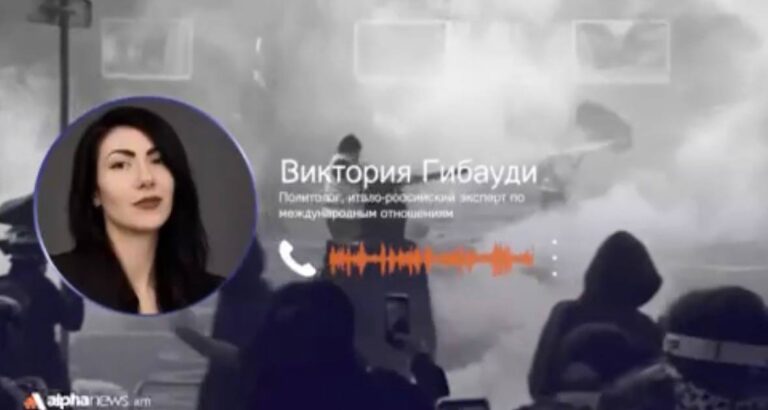
Viktoria Gibaudi, political scientist and Italian-Russian expert on international relations, commented to Alpha News on the reaction of European governments to the riots and on the effectiveness of the measures being taken.
In the expert’s view, the forceful response of European governments does not eliminate the causes of the unrest, and the number of detentions in itself does not indicate that the measures are effective. “A forceful response is present in some countries, for example in France, and it is quite large-scale, but the results are still insufficient. In France specifically, about 2,400 people were detained in October, while a thousand police officers were injured. The amount of damage done to monuments, buildings and shops speaks for itself. Despite the fact that the authorities introduced a local curfew, increased the police presence in the largest cities and took other measures, the situation remains completely explosive, and the consequences are frankly deplorable.
In Italy, water cannons and tear gas were used to disperse crowds. On October 18 alone, police in Milan detained almost 300 people. The government also decided to send 500 military personnel to the city. But it is important to understand that the number of detentions is not an indicator of effectiveness.
Because if a repeat offender who takes part in the rioting ends up back on the street a few hours or days later, as often happens, the detention turns into a statistical formality. Figuratively speaking, the person simply went out there for a walk and then returned to his usual life, however cynical that may sound. The police are trying to put out the fire, but reality keeps delivering more fuel,” the expert said.
According to Gibaudi, the protesters remain a disorganized minority, and the authorities’ inability to eliminate the causes of the unrest points to problems in the political leadership of European countries and to the influence of transnational interests.
“It is important to understand, however, that the protesters remain a disorganized minority. The fact that European states continue to respond disproportionately to the problem, trying to put out a local fire instead of addressing the cause that gave rise to it, points to a whole range of problems at the very top. These are, first of all, shortsighted, overconfident politicians, and also, often, an inability to act independently because of a whole range of transnational and supranational interests and agreements, including NATO, a military and political bloc that includes most European countries and intends to continue confrontation with Russia, contrary to the direct interests of the citizens of those same European states,” she concluded.
 Now live