
Putin on the prospects of a “new Yalta”: in today’s conflicts, the realities will have to be accepted
November 19 2026, 18:20
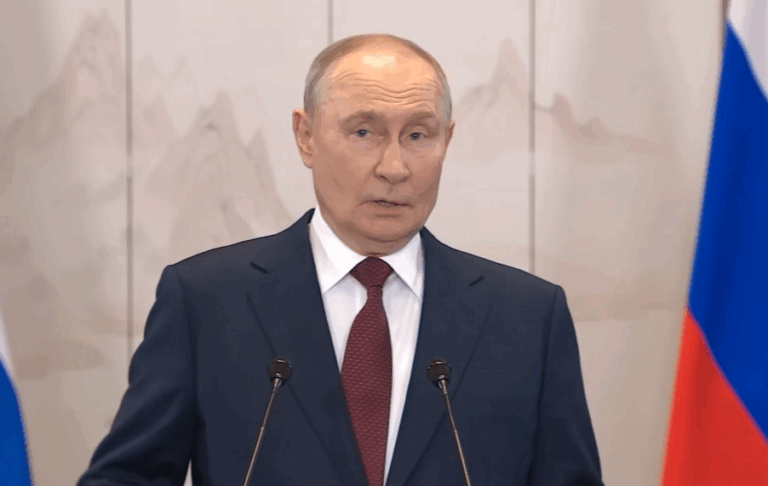
Following trilateral talks in China with Xi Jinping and Donald Trump, Vladimir Putin, President of Russia, held a press conference. He called the meeting a page in the history of diplomacy and expressed hope that it would continue.
According to the Russian leader, Xi Jinping managed to create an atmosphere for a trusting conversation, and after the official statements the talks turned into an unexpectedly free and candid discussion that allowed the sides to understand each other better. The summit covered international security in the broadest sense, nuclear non-proliferation and UN reform, as the organization’s work needs to be adapted to present-day realities. Putin stressed that global security today depends largely on Russia, the United States and China, and that Moscow’s demands regarding the European security system are legitimate. He also said that the International Criminal Court is overstepping its remit and making legally unfounded decisions.
Asked about a “new Yalta,” Putin said that the world was not divided up at Yalta. The conference only formalized the victory over Nazism and the postwar realities, he said, adding that in today’s conflicts the realities on the ground will have to be accepted, and it would be good to formalize the victory over neo-Nazism. At the same time, Putin noted that despite numerous regional conflicts, there are no global upheavals, and what happens next no one knows but God.
Speaking about relations with the United States, Putin said that Donald Trump sincerely seeks to restore bilateral cooperation in a number of areas, is committed to resolving conflicts, including the one in Ukraine, and shares his approach to civilizational values. According to Putin, the Trump administration’s attitude gives grounds for optimism, although it is not easy to see agreements with Washington through to the end. Nevertheless, Moscow hopes this attitude will continue, believing that any agreements are better than none, even if they are not fully implemented.
Turning to Ukraine, Putin said that Russia seeks lasting peace and did not start the war, but is trying to end a conflict that, he claimed, was started in 2014 by the new authorities in Kyiv against the regions that did not recognize their regime, and that Moscow then spent eight years trying unsuccessfully to resolve peacefully. He noted that Russia had accepted the compromises proposed by the United States for a settlement, while Ukraine and Europe were not yet ready for them. In Putin’s view, the authorities in Kyiv have no incentive to stop fighting, because ending the conflict would mean holding elections, after which the leadership would find it difficult to stay in power, and would also cut off its funding and its ability to “embezzle” funds.
 Now live