
A conflict is escalating between the parties: Konstantin Tasits on the contradictions between Russia and Armenia
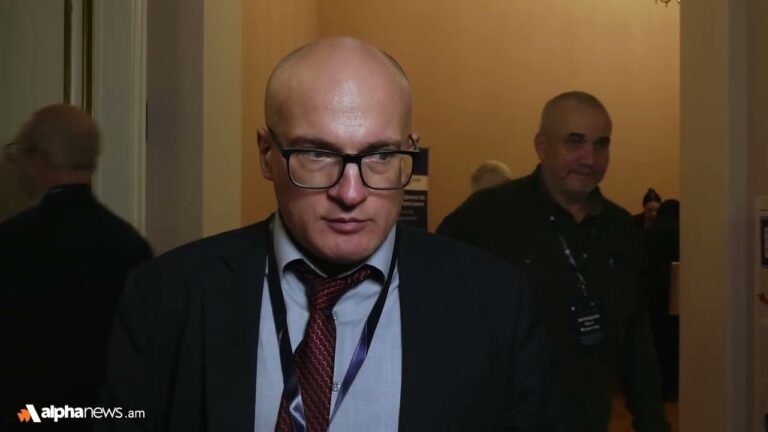
Konstantin Tasits, political analyst and expert on the South Caucasus, commented to Alpha News on Armenia’s desire to join the European Union.
“We see that a conflict is escalating between the parties. Pashinyan stated that he would be glad if Armenia were expelled from the CSTO, and also confirmed his readiness to submit an application to join the European Union. In turn, the speaker of the Russian parliament, Vyacheslav Volodin, noted that Armenia’s position should be more honest: if it is joining the European Union, it needs to abandon the preferences it receives within the Eurasian Economic Union, and, accordingly, after leaving it, continue the path of European integration. It seems to me that this has its grounds. Because, despite the fact that the Armenian side claims that it is necessary to have a formed alternative, we know that, for example, in Georgia, a referendum on joining the EU and NATO was held at a time when the association agreement had not even been signed. Therefore, if the Armenian side chooses a certain development vector, it is necessary to be more consistent. It is necessary to formalize this as the people’s will and, accordingly, to withdraw from the Eurasian Economic Union and move towards a European path,” the political analyst believes.
According to Konstantin Tasits, Armenia should look at the not‑very‑successful experience of Moldova, Ukraine, and Georgia in the process of moving towards the European Union and draw the right conclusions from it.
“We, again, have the experience of Moldova, Ukraine, and Georgia, and it shows that the European Union does not compensate for the losses these countries incur as a result of breaking off relations with Russia. Georgia has never been able to fully enter the European market with its products: it was not allowed in due to problems with phytosanitary standards and logistics issues, even though it is located on the coast and is much closer to the European Union than Armenia. In Moldova, since 2022, the economy has been growing at around zero, there are very serious social problems, energy issues, and the subsidies provided by the European Union are barely enough to offset some price increases. In other words, we are not talking about development. At the same time, we also see that there has been no significant improvement in public administration: corruption scandals are shaking the country, and there are problems with the law enforcement and judicial systems. Therefore, if this experience is not convincing, there is nothing that can be done about it. We need to experience firsthand what happens when relations with Russia are severed or weakened, alongside efforts to draw closer to the European Union,” the Alpha News interlocutor concluded.
 Now live