
Armenia could be expelled from the EAEU or have its membership frozen: Elena Zinovieva
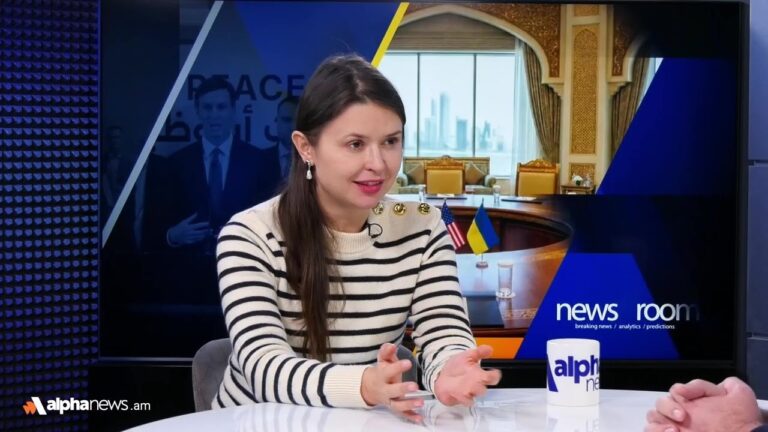
Elena Zinovieva, a professor at the Department of World Political Processes at MGIMO University and a Doctor of Political Science, spoke to Alpha News about the negotiations to settle the conflict in Ukraine, the upcoming meeting of the leaders of Russia, the United States and China, and the possibility of a new security architecture in Europe. She also discussed the December visits to Russia by Nikol Pashinyan, Armenia’s prime minister, and the outlook for Armenia’s continued participation in the Eurasian Economic Union.
In the expert’s view, the increase in diplomatic contacts is a positive signal, but it is too early to expect a quick breakthrough in the Ukraine talks.
“The fact that the negotiation process has picked up is, of course, a positive signal. Given the difficult domestic political situation Trump is now facing in the United States, I think he will be highly motivated to achieve success in foreign policy. His personality can’t be discounted: he wants to leave his mark on history. Clearly, foreign policy will now have more resonance for him. He likes high-profile, attention-grabbing statements and decisions. Given his character and interest, we can expect this momentum to continue. But considering the mood of both the Europeans and the Ukrainians, it’s unlikely we’ll see any breakthroughs. Zelensky, I think, understands very clearly that any agreement would, in a certain sense, mean the end of his political career, and for the Europeans an agreement would also mean a substantial overhaul of the entire European security architecture,” Zinovieva said.
Speaking about the Armenian prime minister’s upcoming December visit to Moscow and his course toward closer ties with the EU, the expert said Yerevan seeks to keep the benefits of EAEU membership while expanding cooperation with the West.
“Given the current statements, it is very likely that a process will be launched either to freeze Armenia’s membership or to expel it from the EAEU. That is certainly undesirable for Armenia, since membership means access to markets, access to cheap energy and a certain opportunity to take part in decisions that matter for the region. At the same time, there is still no certainty at all about EU membership. On the one hand, Armenia is interested in keeping its EAEU membership for as long as possible, because it brings economic and geopolitical advantages. On the other hand, Armenia is interested in building up its ties with the West, partly because of the changing security architecture in the East. This effort to keep room for manoeuvre is why we hear contradictory statements about its foreign policy priorities,” the expert said.
According to the political scientist, Russia is interested in keeping a window of opportunity open for Yerevan so that, if Armenia’s foreign policy priorities change, there is still a prospect of restoring relations.
“At the same time, I think Armenia’s general course of reducing its involvement in post-Soviet institutions will continue under the current administration and is unlikely to change. But Russia is interested in keeping a window of opportunity open for Armenia so that, if its foreign policy priorities change, there are no abrupt steps and no burned bridges. Instead, there would still be room for cooperation, a chance to restore relations, and an opportunity for full participation in economic integration in the Eurasian space, in military-political alliances and in ensuring common security,” Zinovieva concluded.
 Now live