
MEP: by indulging Azerbaijan, EU leadership is weakening the European Union itself
September 18 2026, 16:12
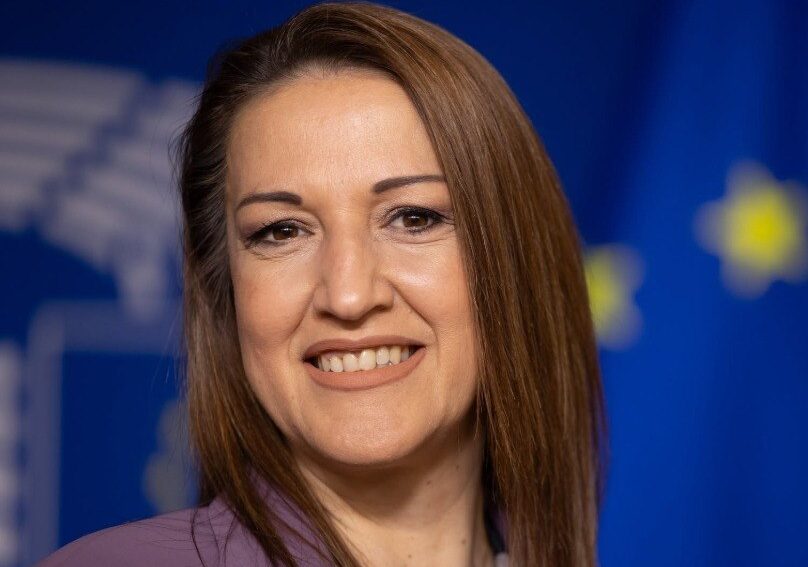
“The responses from the EU’s High Representative on questions related to Azerbaijan, Turkey and other topics tend to boil down to the same thing: there’s no direct answer to specific questions. Instead, we hear general statements that these issues are being discussed with partners and included on the negotiating agenda. At the same time, there’s no concrete information and no clear political position. Essentially, it’s limited to acknowledging that the question was raised,” Maria Zacharia, Member of the European Parliament from Greece, told Alpha News. She had previously sent a written inquiry to Kaja Kallas, the EU’s High Representative for Foreign Affairs and Security Policy, regarding the European Union’s relations with Azerbaijan.
As a reminder, the question concerned the fact that the expansion of the EU’s strategic energy and transport ties with Azerbaijan contradicts Articles 2, 3(5), 18 and 21 of the Treaty on European Union.
“My question was extremely specific: it concerned guarantees for the observance of human rights, the situation of Armenian prisoners held in Baku, and other cases of human rights violations. We cannot be satisfied with an answer that effectively allows the European Union to evade its own obligations. This concerns, in particular, the fate of Armenian prisoners in Baku and how their situation should be reflected in the EU’s relations with Azerbaijan. However, the response from the High Representative, like many responses from European institutions, once again amounts to general formulations and fails to answer the specific questions we raised.
That is precisely why we believe it is necessary to press not merely for confirmation that a given issue has been “placed on the agenda,” but for concrete answers: what measures the EU is taking, what demands are being made of its partners, and how compliance with the human rights commitments it has undertaken is being ensured.
They (EU leadership — ed.) are acting against the will of the majority. In our view, this amounts to an abuse of their authority and a disregard for the rules and treaties on which the European Union is built. All of this is happening at a time when citizens should be able to form and express their own position. However, we are often hindered in getting this information across to people, especially given that the major political factions and most politicians are caught up in this political game.
That’s why we constantly have to fight to raise these issues and mobilize citizens, to explain to them that the established rules are not being followed. Citizens should not vote for politicians and delegate them to sit here [if this continues],” Maria Zacharia said.
Commenting on Aliyev’s accusations against the European Parliament, which he called corrupt, as well as on the question of whether EU leadership’s weak stance toward Azerbaijan is behind such sharp statements, the MEP stressed: “If EU leadership does not take a firm position on what is happening, then of course this gives Aliyev the opportunity to speak out with attacks ever more openly, to raise new issues, and even to criticize the United States, which he believes is taking no action toward the EU.
All of this, in the end, weakens the European Union’s position and undermines trust in its institutions and rules. We believe that EU leadership has consciously chosen, on many issues, a path in which its own political and economic interests are placed above adherence to the rules and principles on which the European Union is founded. But such a policy ultimately weakens the EU itself. This effectively amounts to ‘shooting itself in the foot’: sooner or later, abandoning its own rules and obligations will backfire on the European Union itself.”
 Now live