
Pashinyan wants Russia to exclude Armenia from the CSTO in order to play the anti‑Russian card: Alexander Shatilov
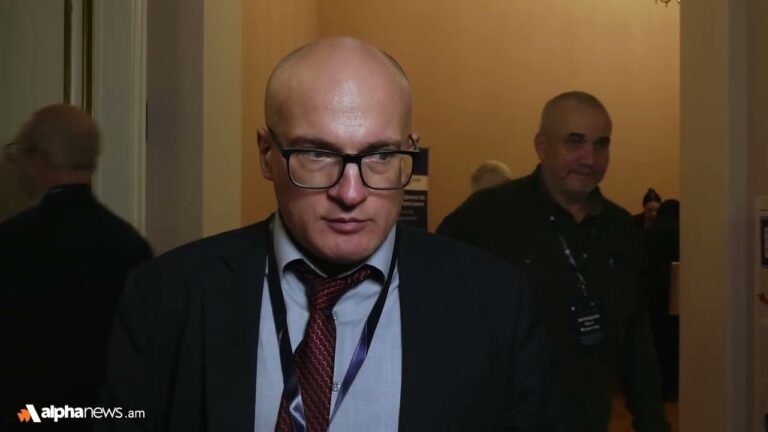
Alexander Shatilov, a professor of political science at the Financial University under the Government of the Russian Federation, commented to Alpha News on the possibility of Armenia withdrawing from the Collective Security Treaty Organization and joining the European Union.
“Here, as they say, one can’t help but recall the toast: ‘Let’s drink to the idea that our desires should align with our capabilities!’ This is especially true when it comes to joining the European Union, because we can see that a whole number of countries are currently crowding into the EU’s waiting room, and there’s no sign of any mass accession. In this regard, Armenia’s path to the EU could take many years, if not decades, if the process even gets underway, because there are a huge number of factors that neutralize such opportunities,” the political analyst noted.
According to Alexander Shatilov, the Armenian leadership expects to cooperate with Russia in an economic format, but to break off political ties.
“As for withdrawing from the CSTO, I think that Pashinyan has chosen his pro‑Western course and is therefore acting in line with it, hoping that Russia will not, so to speak, proactively exclude Armenia from other integration associations.” So, in essence, this will now be the main principle of Pashinyan’s policy, an attempt to maintain relatively beneficial economic cooperation with the Russian Federation while distancing himself from it politically as much as possible,” the expert emphasized.
He sees in the actions of the Armenian authorities a desire to shift responsibility for the potential exclusion of Armenia from the CSTO onto the Russian leadership in order to discredit it in the eyes of the republic’s citizens.
“Pashinyan wants Russia to exclude Armenia from the CSTO and from other integration associations in general, in order to play the anti‑Russian card within Armenian society, where, in principle, the attitude towards Russia is still quite positive. Therefore, it is necessary to demonize Russia to some extent and demonstrate that it is not we who are severing ties with Russia, but rather Russia that is pushing us away, rejecting us, and so on, and so forth. We’ve seen this kind of policy in action, for example, in Ukraine, Moldova, and a number of other openly anti‑Russian states in the post‑Soviet space,” the Alpha News interlocutor concluded.
 Now live