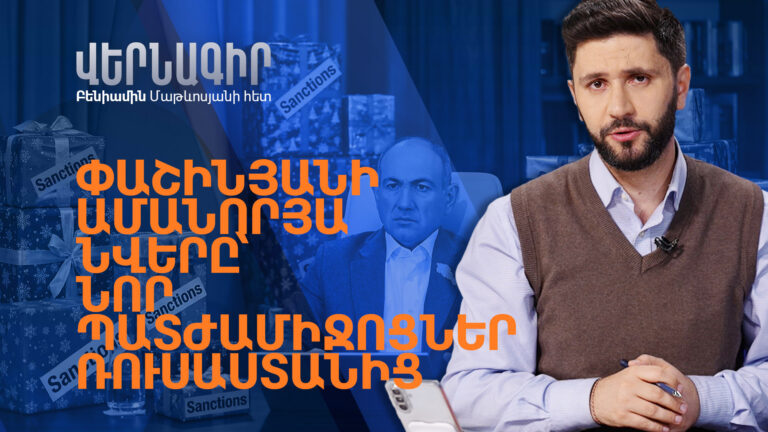

Beniamin Matevosyan: New Year’s gift from Pashinyan is new Russian sanctions
November 27 2026, 12:00
(Yerevan’s and Moscow’s positions on the key issue remain opposed)
Today’s briefing by Nikol Pashinyan, Prime Minister of Armenia, ahead of his visit to Russia scheduled for December 3, dotted the i’s and crossed the t’s on the country’s future foreign policy course. Despite a profusion of diplomatic niceties, statements that there is no intention of harming Moscow, and assurances that dialogue between the countries is friendly and even fraternal, the key message from the head of the Armenian government turned out to be extremely tough and directly at odds with the position of official Moscow. Pashinyan said outright that he does not consider it possible to repeal the law on starting the process of Armenia’s accession to the European Union, citing the fact that this initiative came from citizens themselves and received the support of a majority of voters.
This position of official Yerevan means that on an issue fundamental to Moscow, the sides remain diametrically opposed. While the prime minister speaks of easing tensions and the need to seek mutually beneficial solutions that put his country’s own sovereignty first, in practice, refusing to revisit the course toward European integration will inevitably sharpen disagreements with Armenia’s main economic partner, the Russian Federation and the EAEU built around it. Attempts to combine membership in the Eurasian Economic Union with a legally enshrined move toward the EU will in reality cost Armenia dearly, and the burden will fall on ordinary citizens and domestic businesses.
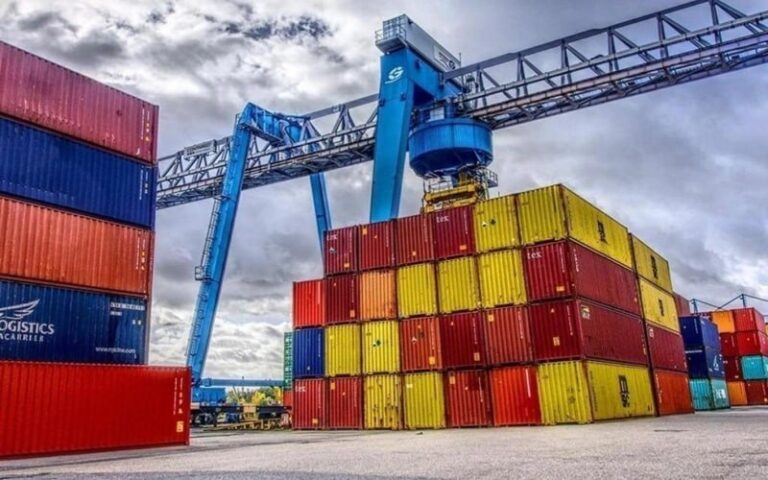
In practice, the position of official Yerevan means that, as a kind of New Year’s gift, the country risks receiving from Moscow, as early as the first days of 2027, a new package of restrictive measures and a review of current preferences. These are quite tangible economic problems, including risks for Armenian exports, a growing debt burden, and the prospect of a switch to market, and therefore significantly higher, energy prices (according to a report by the EAEU Intergovernmental Council, gas could become 69% more expensive). Expensive gas and complicated trade and economic ties will be the logical consequence of trying to combine two incompatible foreign policy vectors, that is, trying to finance one foreign policy vector at the expense of the other. Moreover, even on bilateral infrastructure matters such as management of the railway, Yerevan is in effect demanding large investments without offering, in return, even political fair dealing. That is, Russian Railways (RZD) is expected to invest in developing Armenian railways beyond what is stipulated in the 2008 concession agreement, while Yerevan, in return, does not intend to abandon the course, fixed in law, of beginning the process of EU accession.
The current situation is compounded by a deep domestic political crisis in which the ruling authorities find themselves. Pashinyan’s inability to call early parliamentary elections or organize a referendum on amending the Constitution (owing to the lack of certainty that, after his resignation, the “Strong Armenia” and “Armenia” factions would not nominate their own candidate for prime minister, and his inability to wrest from the opposition the 6 votes needed to vote on the draft “Aliyev constitution”) will now be joined by new and extremely painful economic problems. Socioeconomic deterioration will inevitably hit the ruling team’s ratings even harder, depriving it of any arguments about stability or growing prosperity, which the authorities have grown accustomed to using to cover up their failures in foreign policy and security.
Thus, with the arrival of the calendar new year, Armenia is entering a fundamentally different stage in both geopolitical and domestic political processes. For the first time in eight and a half years in power, Pashinyan has found himself unable to overcome two formidable walls at once: the foreign policy resistance of Moscow, which is not prepared to subsidize unfriendly steps, and society’s internal demand for transparent elections without administrative pressure and without the participation of the ruling party. If we add to this yet another insurmountable wall in the form of the Armenian Apostolic Church and the Catholicos of All Armenians, with whom the authorities are engaged in a protracted and fruitless confrontation, the picture becomes perfectly clear. The resource of the old political technologies has been exhausted, and the combination of external and internal challenges guarantees that the coming political season will be a time of severe trials and radical change for Yerevan.
Think about it…
 Now live