
Beniamin Matevosyan: Putin’s folder – what will the negotiations with Pashinyan be about?
September 01 2026, 13:10
(Vladimir Putin never received Nikol Pashinyan in Moscow)
The upcoming meeting between Russian President Vladimir Putin and Nikol Pashinyan on the sidelines of the SCO summit in Bishkek promises to be extremely complex. The fact that the negotiations will take place at a neutral venue, rather than as part of a full‑fledged visit to the Kremlin, speaks for itself. Vladimir Putin not only did not congratulate Pashinyan on his election “victory,” he also did not receive him in Moscow, although during the recent election campaign, the Armenian prime minister actively assured the public of an “early visit to Moscow after the elections” so that it would be possible to discuss in detail all the accumulated agenda.
The lack of a personal invitation to the Russian capital and the refusal to publicly congratulate Pashinyan on his victory in the National Assembly elections is a transparent signal: the Kremlin does not intend to pretend that everything is going on between the countries.
Putin’s “folder of demands,” which he brings to these negotiations, is absolutely clear. Recent statements by Dmitry Peskov, the press secretary of the Russian president, and Yuri Ushakov, Presidential aide, indicate that Russia’s position has not changed in any way. Moscow is openly demonstrating that the crisis in relations between Yerevan and the Russian side is escalating, and Pashinyan is unable to stop this negative trend. The previous format of relations has been destroyed, and the new format remains as unclear as possible.
The central issue in the negotiations will be Armenia’s geopolitical self‑determination. The Russian side intends to put the issue of the incompatibility between Yerevan’s attempts to turn towards the European Union and its continued participation in the integration structures of the Commonwealth, primarily the EAEU, on an extremely firm footing.
As Yuri Ushakov pointed out directly, Armenia cannot simultaneously seek EU membership and continue to derive enormous economic benefits from the EAEU. Holding a referendum on the topic of geopolitical choice is the position that Moscow, together with its EAEU partners, is putting forward to the Armenian leadership. Dmitry Peskov, the president’s press secretary, also stressed that Russia cannot be “more Armenian than the Armenians themselves,” and that the decision on the country’s future should be made by the people themselves through a direct referendum, not by a narrow group of politicians in Yerevan.
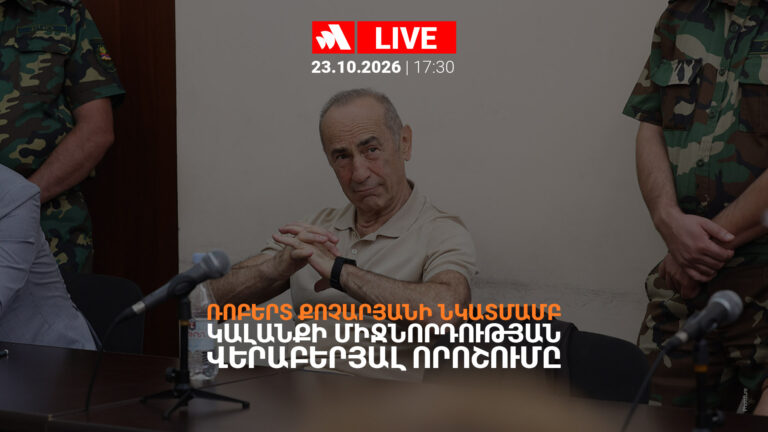
The second, but also extremely important, topic in the “Putin folder” will be the issue of political persecution of the Armenian opposition, and first and foremost, of the second president of Armenia, Robert Kocharyan, who has traditionally advocated for the development of good‑neighborly, allied relations with Russia. The wave of arrests and prosecutions of figures who advocate for an adequate dialogue with the Russian Federation is causing not just extreme concern in Moscow, but outright rejection. By raising the issue of protecting opposition leaders and President Kocharyan, Putin is making it clear that Moscow does not intend to passively watch as Armenia’s political landscape is cleared of supporters of Eurasian integration.
The essence of the upcoming meeting in Bishkek is clearly visible. The agenda shaped by the Russian side forces Nikol Pashinyan to provide direct answers to the questions that have accumulated in Moscow. The diplomatic maneuver and attempts to reconcile mutually contradictory foreign policy vectors have exhausted themselves. Pashinyan’s line on integration with the EU while maintaining EAEU benefits, accompanied by repressions against supporters of partnership with Russia, has finally created a crisis, the way out of which requires clear and unambiguous decisions from the Armenian leadership.
Think about it…
 Now live