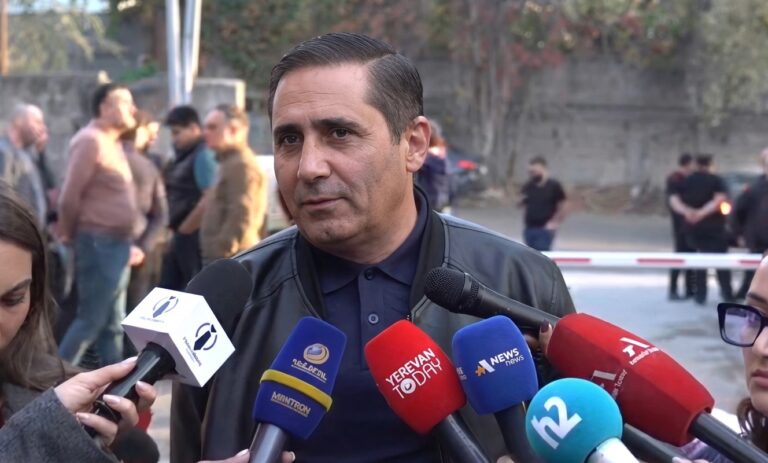

Beniamin Matevosyan: the negotiating strategies of Putin and Pashinyan
September 04 2026, 12:15
(Not an alliance, but continuous confrontation)
The latest public statements coming out of Yerevan and Moscow following the recent high-level Armenian-Russian contacts in Bishkek clearly demonstrate that the crisis in Armenian-Russian relations has moved into a phase of open conflict, an open probing of the limits of what is acceptable. Immediately after the Bishkek talks, the external rhetoric of the Armenian leadership retained an appearance of restraint and optimism (right after the talks with Putin ended, Pashinyan recorded an enthusiastic video from his car expressing satisfaction with the negotiations), but upon returning home, Nikol Pashinyan shifted to a demonstrably harsher tone. Yerevan has effectively decided to move further down the path of escalation, continuing its practice of raising the stakes. The reassessment of the significance of Russia’s 102nd military base (Pashinyan stated that Armenia has no objection to the withdrawal of the Russian military base), skepticism about the indefinite nature of obligations within the Eurasian Economic Union (“No country belonging to the EAEU has sworn an oath of allegiance, and each is free in its own decisions,” Pashinyan said), and ironic remarks about the country’s Soviet past, all of these are elements of a single line aimed at demonstrating a readiness for a radical revision of the established status quo, a readiness to keep raising the stakes.
However, this strategy contains a fundamental miscalculation. The effectiveness of a stakes-raising approach depends directly on having real leverage over one’s opponent. The Armenian side lacks any instrument of pressure on the Kremlin, and personally on Vladimir Putin, while Moscow possesses a comprehensive set of economic, infrastructural, political and military levers. The reaction of Russian officials to Yerevan’s demarches has shown that the Russian side does not intend to concede ground. The Kremlin has made clear that the decision on European integration is Armenia’s sovereign choice, but the consequence of that choice will be the inevitable loss of all trade, energy and customs privileges available within the EAEU. This was stated by Alexey Overchuk, Deputy Prime Minister of the Russian government and the chief architect of Armenian-Russian relations during Pashinyan’s premiership.
The impossibility of combining participation in two fundamentally different economic blocs is being presented not as an ultimatum but as a pragmatic fact. A distinctive feature of Moscow’s new negotiating strategy is a shift in the intended audience of its communications. The Russian leadership, first and foremost Vladimir Putin, President of Russia, is increasingly appealing not to the current government in Yerevan but directly to Armenian society. Statements emphasize that the fate of key elements of the bilateral partnership, from the presence of army units to trade and industrial ties, should be determined by the will of the people, not by decisions of the ruling elite. Whatever the people decide, rather than the aggressive minority currently in power, is what Russia will act on. In this way, Moscow is drawing a clear distinction between the country’s national interests and Pashinyan’s political course.
The prolonged standoff and the progressive degradation of interstate dialogue carry serious risks for both sides. For Yerevan, a hasty break with its traditional partner threatens to undermine economic stability and forfeit existing security guarantees in an extremely volatile region. For Russia, destabilization of ties in the South Caucasus means an erosion of the familiar architecture of regional security, with the potential spread of instability to neighboring territories, the North Caucasus above all. Escalating confrontation, in place of a pragmatic search for compromise, jeopardizes the fundamental interests of both states, turning the partnership into a dynamic of constant friction.
Think about it…
 Now live