
Protests may shift the balance of political forces in Europe, but not its course on Russia: Ekaterina Entina
October 23 2026, 15:54
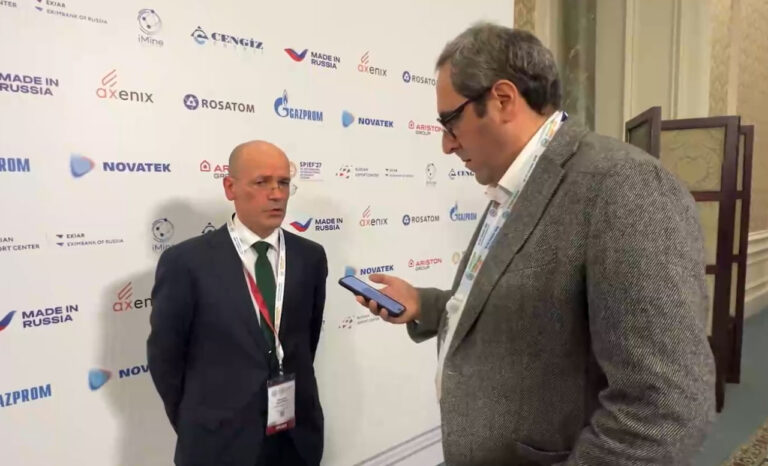
Ekaterina Entina, Director of the Center for Mediterranean Studies at HSE University and Head of the Department of Black Sea and Mediterranean Studies at the Institute of Europe of the Russian Academy of Sciences, spoke to Alpha News on the sidelines of the 19th Verona Eurasian Economic Forum in Istanbul. She commented on how protest sentiment in Europe could affect the policies of European elites toward Russia.
According to the expert, protests in European countries may lead to a restructuring of the domestic political landscape and a shift in the balance between traditional parties and new political movements, but this does not mean Europe will soften its position on Russia.
“My starting point is that there is simply no strong link between the reaction of political elites in European countries and a possible softening of their position on Russia. There is a fairly high probability that this will lead to a regrouping of political forces within individual countries, such as France, Germany, Greece, Serbia and Albania, because protests today are sweeping not only EU countries but also countries on its periphery. Most likely, this domestic protest sentiment will, in the medium term, between two and five years, lead to a restructuring of party systems and of the balance between traditional parties and newly emerging political movements,” Ekaterina Entina said.
In her view, Europe’s ruling elites are unlikely to move toward rapprochement with Russia, as this would mean admitting that their policies have been wrong. “However, I do not foresee that the reaction of the ruling political elites today will be a move toward more constructive relations with Russia. First, Russia is a unifying factor for most European Union countries, and it is what consolidates the EU today. Second, for the elites currently in power in all EU countries, changing their position on Russia would mean admitting that the policy first developed and then agreed at the supranational level was completely wrong. It is impossible to imagine politicians in any country in the world acknowledging their own insignificance or wrongness, admitting that they made a mistake that led to serious changes in both the external and internal situation of their country. Europe cannot be an exception in this respect, not least because of its particular mindset and its notions about the superiority of the Western European individual and Western European political culture,” Entina concluded.
 Now live