
Severing relations with all Russian institutions is very dangerous for Armenia — Alexander Tsinker
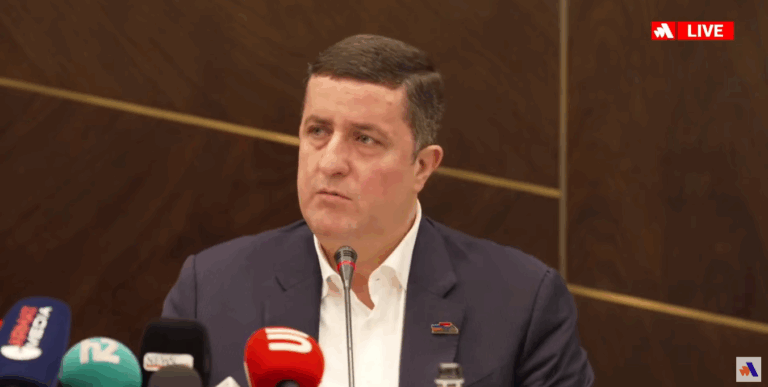
Speaking with Alpha News, Alexander Tsinker, Director of the Institute of Eastern Europe and the CIS in Israel, commented on the current relations between Armenia and Russia. According to the expert, it is highly dangerous for Armenia to sever ties with all Russian institutions solely based on the desire to join the European Union.
“As for relations with Russia, they are quite strained today. However, given the recent changes, with Sergey Kiriyenko, the First Deputy Head of the Presidential Administration, now overseeing relations with Armenia from the Kremlin, I believe Russia will take a more active interest in Armenia. And, accordingly, Armenia should strive to establish productive relations with Russia as well. Because it is very dangerous to break off relations with all Russian institutions when there is only a desire for EU membership and nothing more. Now Armenia should adopt a very reasonable policy, it is necessary to really communicate with all countries and find effective relations with each one that would benefit both countries,” Tsinker said.
According to the political scientist, Russia does not want to lose its influence in the South Caucasus.
“It is no secret that the relations between Armenia and Russia have cooled significantly, Armenia has virtually frozen its participation in the CSTO. At the same time, Armenia’s relations with European countries have intensified, which, in principle, does not mean anything yet, it is still only an aspiration, but Russia is closely monitoring these developments and sees that Armenia is moving further. Moreover, Russia also feels that there is a very strong competition for influence in the South Caucasus today. It is no coincidence that Iran’s President arrived in Azerbaijan, Israel’s Prime Minister plans to visit soon, Turkey’s President is expected to follow, at the same time, European observers are on the borders with Azerbaijan.
That is, today there is competition for influence in the South Caucasus that, and Russia, naturally, does not want to lose the influence that it had, at least in the nineties, when the Soviet Union collapsed. At that time, relations with Russia in the former republics that became independent countries were very close and tight. Therefore, the situation, it seems to me, is quite difficult and we must try to get out of this situation wisely,” Tsinker concluded.
 Now live