
US-EU disagreements could be used to increase pressure on Russia: Ekaterina Entina
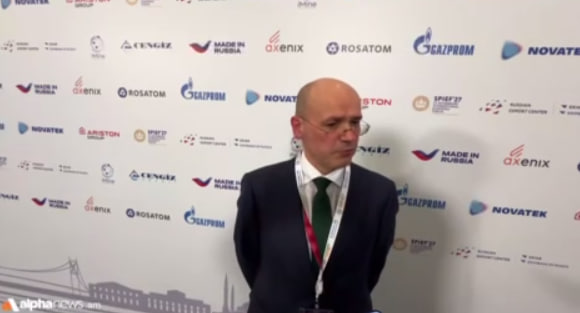
Ekaterina Entina, Director of the Center for Mediterranean Studies at HSE University and Head of the Department of Black Sea and Mediterranean Studies at the Institute of Europe of the Russian Academy of Sciences, spoke to Alpha News on the sidelines of the 19th Verona Eurasian Economic Forum in Istanbul. She commented on how the dialogue between Russia and the United States could affect relations between Russia and Europe.
According to the expert, the start of a constructive dialogue between Russia and the United States has not led to the expected change in the European Union’s position, and disagreements between Washington and the EU could either increase pressure on the EU or lead to a further hardening of the West’s position on Moscow.
“Today we can see that we were probably counting on a completely different reaction from the EU: that, seeing the first signs of a constructive dialogue between Moscow and Washington, Brussels would respond accordingly. But the opposite happened. They reacted to it as a completely unacceptable departure from the common Western agenda, the agenda of the so-called collective West toward Russia. And that worries me in its own way, because we understand how fragile the Russian-American dialogue is and how much it depends on a whole range of domestic American factors.
Over the past ten years, as the asymmetric conflict between Russia and the West has unfolded, we have seen that the collective West has ultimately managed to use the friction between the US and the EU, as in a simple game of ‘good cop, bad cop’ toward Russia. In other words, the rift that exists in the transatlantic dialogue can be used in two ways. The Americans could use it to put further pressure on the EU, or it could make the European Union realize that it remains on the sidelines of world politics. But for that, there would need to be substantially more progress in Russian-American relations and a substantially broader agenda than the one discussed over the past month. Alternatively, at any stage this rift could be used as a negative factor to justify the collective West’s renewed hardening of its position on Moscow,” Entina said.
 Now live