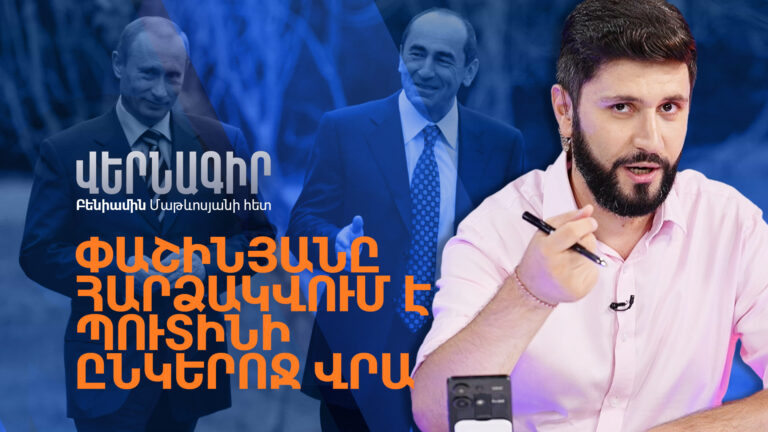

Armenia has already stepped out of the CSTO with one foot: Vladimir Krotkov
Vladimir Krotkov, PhD in Political Sciences and Professor at the Political Science department at the State Academic University for the Humanities, commented to Alpha News on the Armenian authorities’ desire to withdraw from the Collective Security Treaty Organization and join the European Union.
“It should be noted that the current state of Armenian society indicates that it is segmented into different social groups. Although Pashinyan has the support of his group, which has been in power since 2018, this support is far from absolute. Therefore, in the context of this split, the ruling elite, led by Pashinyan, positions itself and navigates between various interests. One of the features of this maneuvering is that Prime Minister Pashinyan himself states not only regarding the CSTO, but also, for example, regarding the EurAsEC, that we would not want to participate there, but at the same time we will not withdraw from it. That is, it’s a kind of half‑hearted position: it’s as if we don’t want to, but we don’t withdraw, and this is his style of avoiding clear political decisions, because he has to maneuver, and he has a rather tense domestic political situation,” the expert emphasized.
According to the political analyst, Pashinyan wants Armenia to be excluded from participation in the CSTO in order to impose the narrative he needs on his electorate.
“If we’re talking about the CSTO, Armenia has already effectively stepped out of it, because, for example, it hasn’t been paying the necessary contributions to the organization for two years now, and that’s already grounds, in principle, to consider the possibility of expulsion. But the CSTO partners and participants do not initiate Armenia’s withdrawal directly, and Pashinyan is taking the position that, they say, “It would be desirable for us to be excluded, so that we can then declare to our electorate and society in general – well, what do you want? What can we do? We were just expelled! We can’t participate there!” This is an inconsistent, half‑hearted course, which, of course, is risky to a certain extent, because, on the one hand, those who do not support Pashinyan will not support him on this issue anyway. And those who do support him would also like some certainty and consistency in political decisions, but they don’t get it. This is the specific nature of the modern policy of the Armenian establishment, which we see today,” Krotkov concluded.
 Now live