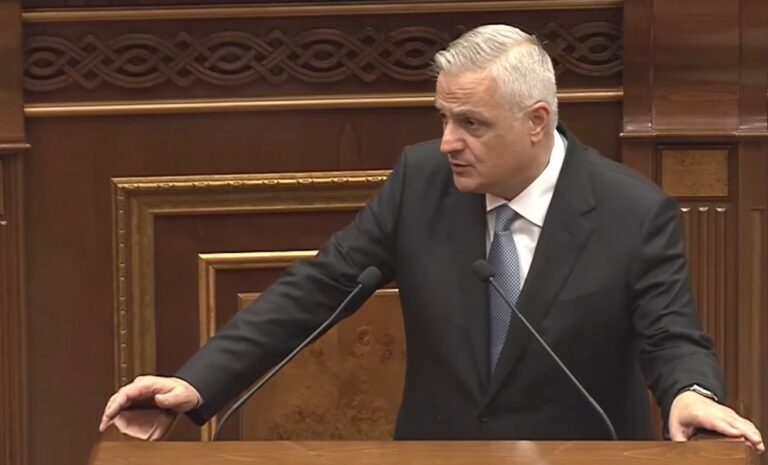

Israeli elections fail to settle future Knesset majority: Alexander Tsinker
Alexander Tsinker, a political analyst, commented to Alpha News on the preliminary results of Israel’s parliamentary elections, the disagreements between Turkey and Azerbaijan, and Baku’s latest statements regarding Armenia amid peace treaty negotiations. In his view, the preliminary election results in Israel do not allow either of the main political blocs to clearly claim victory.
“Netanyahu’s bloc has not won yet, but the opposition ‘change bloc’ has already lost. The Arab lists have won. To win the elections, you need 61 seats. Then you can put together a coalition and form a government. At the moment, judging by statements from leaders on both sides, they do not want to bring the Arab lists into the government or coalition. So it is very difficult for the opposition to form a government and reach 61 seats. But the prime minister has problems too,” the analyst said.
According to Tsinker, one possible scenario is the formation of a national unity government including parties from both Netanyahu’s bloc and the opposition.
“I lean toward the view that they should try to set aside personal motives and put together a national unity government, with two parties from each bloc. But that requires goodwill on both sides,” Tsinker said.
Commenting on the disagreements between Turkey and Azerbaijan, the analyst noted that Baku’s close ties with Israel cause discontent in Ankara but are unlikely to lead to a break in relations with Turkey.
“Turkey, of course, takes a very negative view of the fact that Israel and Azerbaijan have developed very strong business ties. It’s no secret that we buy oil there, almost 50% of our supply, and they buy weapons or military technology from us. Politically, Azerbaijan never opposes Israel either. It tries to maintain some kind of relations with Iran, but it never comes out against Israel. Naturally, Turkey doesn’t like this,” Tsinker said.
Speaking about Baku’s demands on Armenia, including amending the Constitution and an apology from Armenian society, the analyst said these conditions could be supplemented with new demands.
“Changing the Constitution is one of the demands. Even if Armenia holds a referendum in the coming months and some changes are made to the Constitution, even if the Armenian people decide this not because someone demands it, but because they themselves decided to make changes, the very next day there will still be other reasons why the Armenian leadership needs to do something more: on borders, on certain historical statements,” the analyst stressed.
According to Tsinker, the delay in concluding a final peace treaty may be linked to Baku’s attempts to extract additional concessions from the Armenian side.
“I have the feeling that the final peace treaty is being delayed deliberately. It’s a political strategy move. Seeing that the Armenian people and the Armenian leadership want to conclude the treaty, put this behind them, turn the page on past years and start a new life, the other side is trying, as they say, to gain something at the last moment, to shift something more. That’s why I wouldn’t be surprised if more such claims keep appearing,” Tsinker concluded.
 Now live