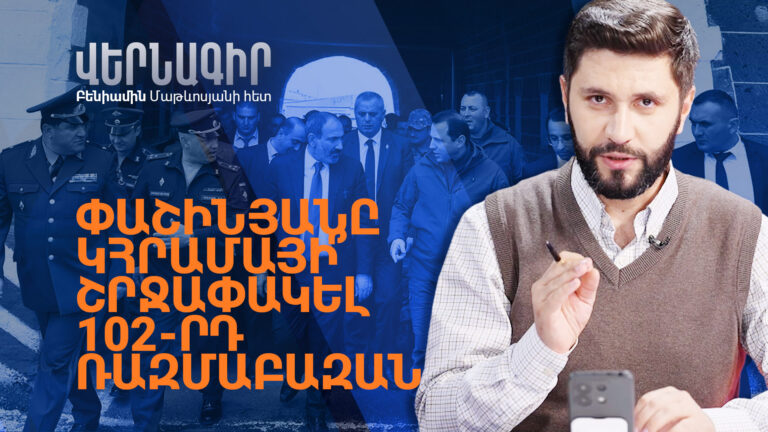

Beniamin Matevosyan: Will Pashinyan order a blockade of the 102nd base?
November 03 2026, 19:00
(What surprises to expect ahead of the meeting with Vladimir Putin?)
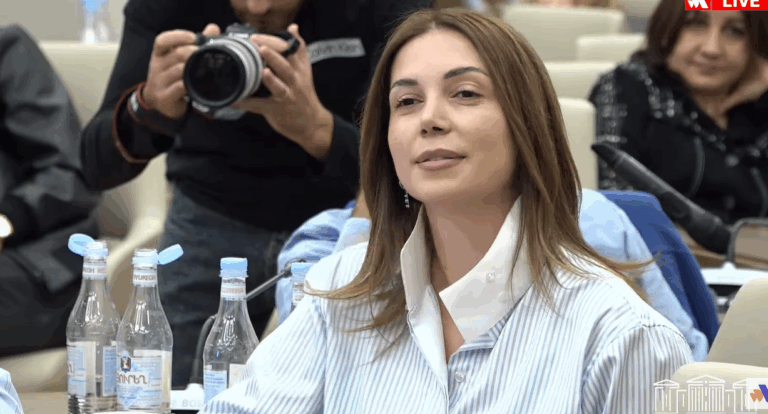
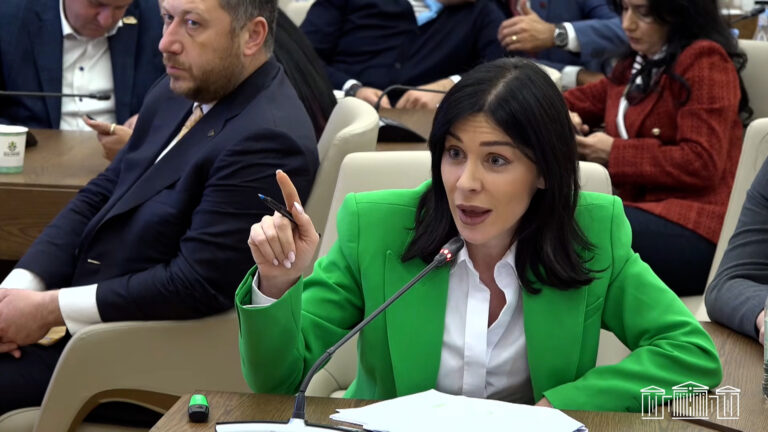
Ahead of planned talks with Vladimir Putin, President of Russia, Nikol Pashinyan, Prime Minister of Armenia, is once again escalating tensions with Moscow. Speaking in the National Assembly during the debate on the draft state budget, the Civil Contract leader resorted to harsh rhetoric, directly accusing the opposition, primarily the parliamentary opposition, of following instructions from abroad. He claimed that the opposition forces operating in the country are backed by “certain circles in the countries of the Eurasian Economic Union and Russia,” which allegedly finance and direct destabilizing processes.
Such rhetoric fits perfectly into the Armenian authorities’ consistent strategy of shifting the blame for problems they themselves created and gradually dismantling the Russian presence in the country. In step with Pashinyan’s statements, his ideological and coalition satellites have also become more active. Aram Sargsyan, chairman of the Republic Party, launched a whole series of legal and political actions. On the one hand, he submitted a sweeping appeal to the Prosecutor General’s Office demanding a full audit of South Caucasus Railway, a subsidiary of Russian Railways, covering its entire period of operation since 2008. The Prosecutor General’s Office promptly took up the appeal, signaling its intention to put pressure on Russia’s key infrastructure asset in the region.
On the other hand, Sargsyan proposed legally banning the leading opposition factions, the Armenia Alliance and the Strong Armenia party, and barring the top ten candidates on their electoral lists from any political activity for five years. This scenario of purging the political field is effectively copied from European methods tested in Moldova and Romania, from where Cosmin Dinescu, head of the EU mission, came to Yerevan. In this arrangement, Sargsyan plays the role of a convenient executor, allowing the authorities to keep a formal distance and hide behind democratic procedures.
At the same time, using attacks on South Caucasus Railway and the opposition as a political tool is only part of a broader plan. Since the blockade of the Lachin corridor in 2022, the government’s ideological allies have been promoting the dangerous idea of blockading or encircling the 102nd Russian military base in Gyumri as a form of blackmail: either Russia opens the corridor by force, or the base stays under blockade. (Listen, for example, to the “political activist” from Artsakh who spent several months in prison over a conflict with Pashinyan that was “accidental, not at all staged, and in no way meant to turn the activist into an opinion leader for the people of Artsakh.” While still in Artsakh, he helped Pashinyan push the Russian presence out of the NKR.) Ahead of Pashinyan’s visit to Moscow, the risk of renewed provocations around the 102nd base or other Russian infrastructure facilities is at its highest.
The confrontational course chosen by the Armenian leadership is clearly visible in Moscow. The Russian side does not intend to back down in the face of blackmail, which means that any further escalation of geopolitical tensions by Pashinyan will inevitably hit the economic stability and quality of life of ordinary Armenian citizens.
Think about it…
 Now live