
Easing of US sanctions against Russia is possible only after a new big deal: Anastasia Likhacheva
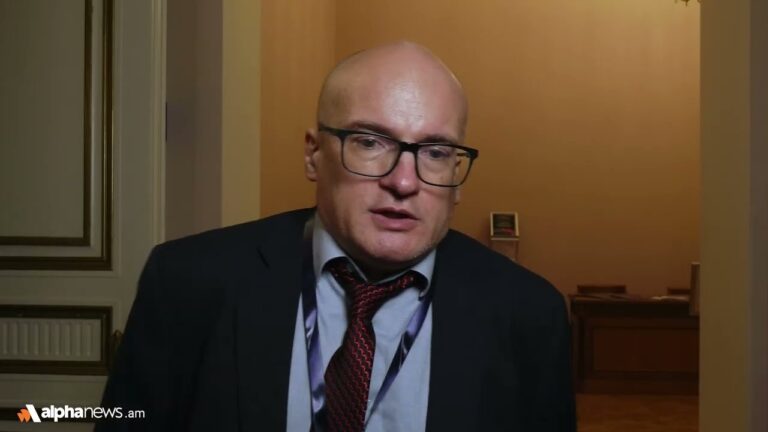
Anastasia Likhacheva, dean of the Faculty of World Economy and International Affairs at HSE University, spoke to Alpha News on the sidelines of the international academic conference “Russia and the new multipolarity: from idea to reality,” held to mark the 20th anniversary of the Center for Comprehensive European and International Studies (CCEIS). She commented on the prospects of a multipolar world, Russia-US relations and the possibility of a direct military clash between Russia and the West.
Speaking about the conference theme and the formation of a multipolar world order, the expert noted that the modern world is becoming increasingly complex and requires states to be flexible in choosing partners and development strategies.
“The participants of the international academic conference marking the CCEIS’s 20th anniversary have touched a very important nerve of this phenomenon of multipolarity. It has never been the case that everyone simply gained more power. This is a growing complexity of the international system. And in this complexity, it is very important to place the right bets. Putting everything on one partner, one technology or one solution is no longer possible. Or rather, it is possible, but it is guaranteed to lead to bad consequences. How to distribute the bets, how to balance sovereignty and development, the most important dilemma of this new multipolarity, is a very acute question. And each country will find its own solution. The US has one answer, China another, Russia a third, but we are all on one little globe,” Likhacheva stressed.
Commenting on Russia-US relations, the expert said that discussing a possible easing of sanctions does not yet mean that Washington is ready for a fundamental review of its sanctions policy.
“At the moment, the attempt, especially in the American media, to discuss any easing of sanctions against Russia is a discussion about how tightly to pull the noose. Russia cannot help feeling it as a noose, but the dialogue is not about removing it, but about moving on to a handshake. Technically, under American sanctions legislation, there is some leeway today: President Trump can, with a single phone call to his treasury, ease life a little for a number of Russian companies and individuals, and even issue permits for certain American companies to work in Russia. But with exactly the same call, all of this is taken back.
Structurally, any change is possible only after a new basis for bilateral relations, a new big deal, is found. Without this, American sanctions are not going anywhere. This is the example of China during the Cold War, and of Syria in the past two years,” Likhacheva noted.
Speaking about the confrontation between Russia and the West, Likhacheva expressed concern over rising tensions and warned of the risks of further escalation.
“The situation is heating up, and it is being heated up very actively. Unfortunately, the military sphere has its own laws. Even if politicians can at some point say, ‘We didn’t mean that,’ dust themselves off and move on, that does not work in the military sphere. Militaries assess not intentions or words, but the capabilities of the sides. Accordingly, the more capabilities aimed at deterring Russia are built up, the more inevitably Russia will react to it. That is why this is an extremely dangerous process. Without a fundamental change in the European countries’ approach to how to be neighbors with Russia, I do not see grounds for optimism,” Likhacheva concluded.
 Now live