
I see no economic grounds for Armenia to leave the EAEU: Alexander Korolev
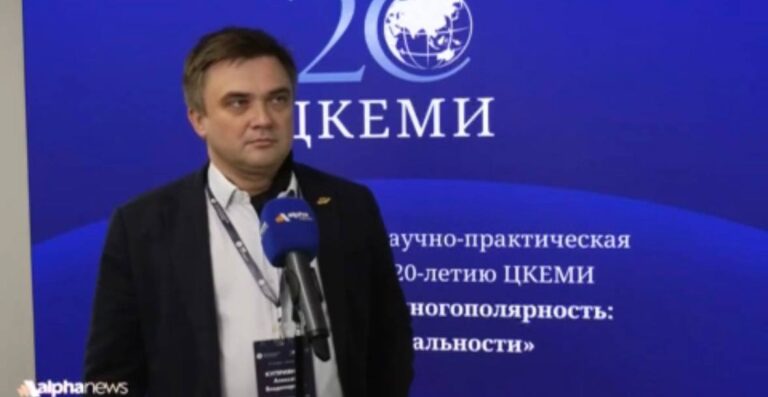
Alexander Korolev, Deputy Director of the Center for Comprehensive European and International Studies (CCEIS) at HSE University, commented to Alpha News on the prospects of Eurasian integration and the possible impact of the question of Armenia’s membership on the future of the Eurasian Economic Union. He spoke on the sidelines of the international scientific and practical conference “Russia and the new multipolarity: from idea to reality,” held for the 20th anniversary of the CCEIS.
Speaking about the state of Eurasian integration, the expert noted that a number of the union’s key tasks remain unfulfilled. “In part, I agree that Eurasian integration has hit a ceiling, because many basic functions of Eurasian integration simply have not been implemented. For example, the task of building a common market for oil, gas and energy resources. It was a stretch goal that has been postponed more than once, and it remains one. The creation of a common financial market is now complicated by the sanctions restrictions against Russia. So the creation of a common exchange space within the EAEU and a transition to some joint payment systems also remain a long-term task for now. The same goes for creating a single transport space. It was discussed ten years ago, it is being discussed now, and it will probably still be discussed ten years from now,” Korolev said.
Commenting on the possible impact of the discussions around Armenia’s membership on the future of the EAEU, the expert expressed doubt that a scenario of the republic leaving the union is realistic. “I do not think Armenia’s expulsion from the EAEU is possible. No one is going to expel Armenia from the EAEU. If Armenia wants to leave the EAEU, it will have to express that wish itself. But, as the leaders of the EAEU states have said repeatedly, there is no mechanism for expelling a country from the union. From an economic point of view, I do not see any possible scenario of Armenia leaving the EAEU at all, so I consider this question highly speculative. There is simply no substantive basis behind it. But right now this question is, of course, a source of irritation for the EAEU member states, especially for Russia as the largest economy and the informal political leader of the union. However, I think that one way or another it will be resolved at the political level and will find its solution within a certain time,” the expert concluded.
 Now live