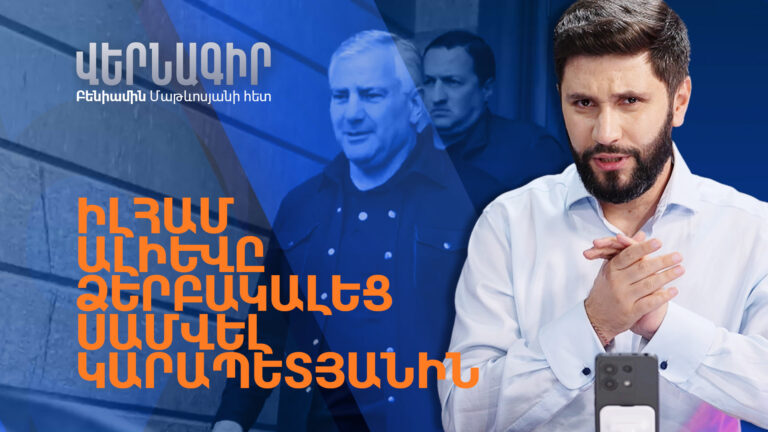

Beniamin Matevosyan: Ilham Aliyev arrested Samvel Karapetyan
November 05 2026, 12:00
(Armenia’s political crisis keeps deepening)
The detention of Samvel Karapetyan, leader of the Strong Armenia party, marks a new stage in the country’s domestic political crisis. Formally, the searches at 65 addresses and the Investigative Committee’s charges of causing damage through Electric Networks of Armenia CJSC concern the economy, but their real context is purely political. Moreover, this course is being set outside Yerevan.
The searches targeting Samvel Karapetyan and Narek Karapetyan, head of the parliamentary faction, amount to direct coercive pressure on the opposition ahead of a key vote on setting the date of the constitutional referendum.
We emphasize once again: although procedural decisions are de jure made within the jurisdiction of Nikol Pashinyan’s team, de facto this step is being carried out under an agenda set by official Baku. For Aliyev, the demand to change Armenia’s Constitution has become the main tool for interfering in Armenia’s internal order and sovereignty. Karapetyan’s detention clearly shows that the authorities are trying to decapitate the opposition resistance completely and preemptively.
It is worth recalling that, besides Karapetyan, the leaders of two other major political institutions in the country are also behind bars: Robert Kocharyan, leader of the Armenia Alliance, and Gagik Tsarukyan, leader of the Prosperous Armenia party. (These are the leaders of the three political forces that officially recorded the highest levels of public support within the opposition in the June 7 elections.) Following this logic of coercion, the next steps could be new criminal cases against relatives of opposition MPs and a direct blockade of the National Assembly building by security forces on the day the referendum decision is made.
However, the chosen scenario is a deep dead end for both Baku and the current leadership in Yerevan. If the Azerbaijani side truly hopes for a long-term peace settlement, holding a referendum “at gunpoint” and amid the crushing of the opposition completely devalues its results. Any future government in Armenia will inevitably challenge the legitimacy of decisions made under administrative and criminal pressure. For Pashinyan, relying on the forceful suppression of opponents is also extremely dangerous. The attempt to push through a “reform of the Basic Law” through blackmail and arrests will not lead to lasting peace; it will only lay the groundwork for the next, even harsher round of escalation. We repeat: any new government may challenge the legitimacy of the referendum, and to prevent this, Baku may launch a preemptive strike on Armenia.
In this situation, the logic of the Armenian authorities’ actions creates an inversion: the crisis gives the Armenian opposition a chance to reverse the trend of past years. To repeat the point we made yesterday: the prime minister publicly links the end of his political mission to the adoption of a new Constitution and the signing of a peace treaty. Consequently, the government’s failure to push these decisions through parliament and society would mean its mandate is exhausted. If the opposition forces can stand firm, withstand pressure from the security agencies and derail the referendum, there will be absolute legal and moral grounds to demand the immediate resignation of the country’s leadership and snap elections.
A genuine reset of the state is possible only if clear conditions are met. The electoral process must take place in an environment where the incumbent prime minister has no levers of administrative pressure, even as acting prime minister, the security bloc is temporarily headed by neutral figures, and the voter lists are completely cleared of manipulation.
A change of political leadership will allow Armenia to break out of the coercive scenario imposed on it, restore the balance of power in the region as a full member of the EAEU and CSTO, and bring the negotiation process with Azerbaijan back on a constructive track with the participation of respected international mediators.
Think about it…
 Now live