
Russia’s terms on Ukraine have become tougher and more serious: Georgy Asatryan
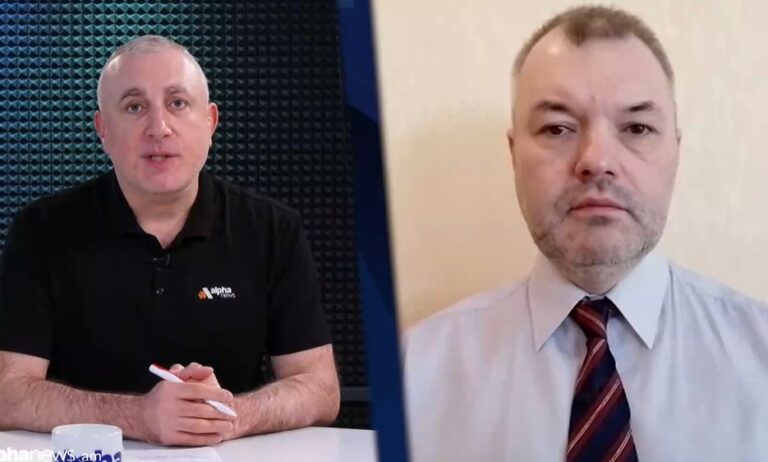
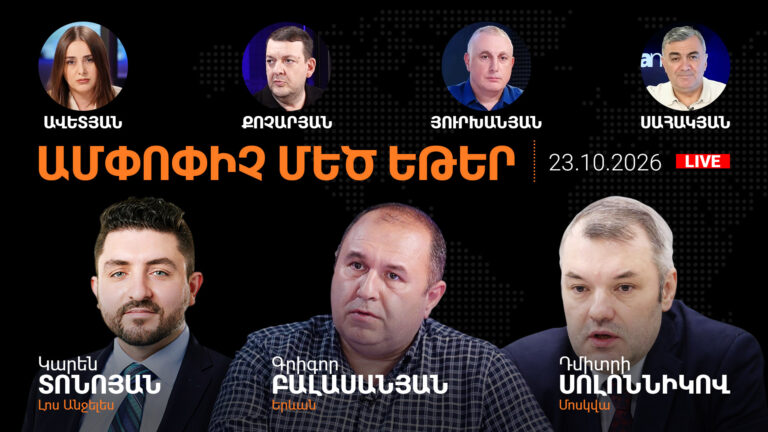
Georgy Asatryan, Deputy Director of the Center of the Institute of World Military Economy and Strategy at HSE University, commented in an interview with Alpha News on the visit of US special envoys Steve Witkoff and Jared Kushner to Moscow and Kyiv, the prospects for peace talks on the Russian-Ukrainian conflict, the situation surrounding Iran, and the outcome of the meeting between Vladimir Putin, President of Russia, and Nikol Pashinyan, Prime Minister of Armenia, in Bishkek.
“A good visit, excellent work. We now see that the situation in the Russian-Ukrainian conflict has changed, and changed in Russia’s favor, in terms of territorial gains on the battlefield, in terms of the military economy, and at every stage of this war, where Russia has been winning, gaining the upper hand, and demonstrating that it cannot be broken under the current circumstances or forced to back down. I think Russia’s terms have become tougher, they have changed, and what was previously proposed, say, in Alaska and at earlier talks, is no longer relevant.
Russia’s position now is more formidable, more serious, and more substantial. This war will not end with these negotiations. Moreover, I think it will continue for quite a solid amount of time, but that doesn’t change the fact that this negotiation process can be chalked up as a win for Russia. There are two things here: the negotiation, diplomatic process, and military escalation. They can proceed in parallel,” Asatryan said.
Commenting on the situation surrounding Iran, the expert noted that despite ongoing tension, the likelihood of a new major military conflict between the US, Israel, and Iran remains low.
“This is a situation of neither peace nor war. It’s a situation in which a certain level of threat toward Iran is maintained, with periodic strikes on various Iranian targets. It’s a sluggish, drawn-out escalation that, to a certain extent, benefits both sides. There’s no compromise here, no end to this war, and it will continue for quite a long time. I think the sides will reach some kind of agreements. From my point of view, military-political circles in both the US and, importantly, Israel have come to understand that all of this is pointless. Iran’s political system is strong, its military-technical development is serious, and they have not managed to break this situation in any way,” Asatryan said.
Commenting on the outcome of the meeting between Vladimir Putin and Nikol Pashinyan in Bishkek on the sidelines of the SCO summit, the expert said that Armenia’s current authorities are consistently pursuing a course of reducing Russia’s presence in the country and reorienting toward the West.
“Armenia’s leadership is doing everything it can to get rid of Russia, of Russia’s presence in Armenia, of Russian economic cooperation with Armenia. In terms of their ideology, they want to restructure the system in the region and redirect Armenia toward the EU and Western influence. But Armenia will never be part of the European Union. That’s clear to anyone who can at least read and write. So all of this is an attempt to present society with unattainable prospects. In my view, Armenia’s possible integration into the Western space would lead to an economic crisis, further weakening of economic sovereignty, and increased conflict in relations with Moscow and Tehran. The retaliatory steps of these two major powers will mean Armenia has more problems. Geography is destiny. You need to understand the world you live in and be a realist. Ignorance of international processes, geoeconomics, and the real state of affairs always leads to dismal results,” Asatryan concluded.
 Now live