

CEC explains why re-voting was not ordered at three polling stations
June 15 2026, 14:45
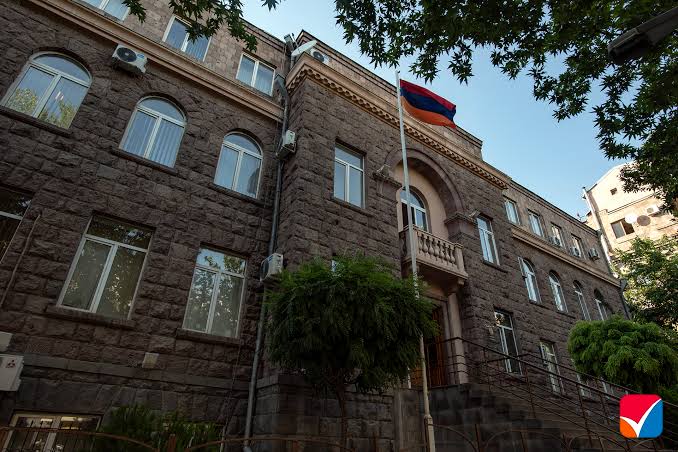
The Central Election Commission, upon invalidating the results at any given polling station, is not required to automatically order a re-vote. This is stated in a declaration issued by Vahagn Hovakimyan, Chairman of the CEC.
“In making such a decision, the CEC must take into account the protection of voters’ genuine expression of will and the ensuring of the legality of election results. It must therefore choose the measure that, under the given circumstances, is necessary, proportionate, and does not cause greater distortion than the violation whose consequences are to be remedied.
Partial re-voting gives rise to the following problem. Voters who participated in the main vote cast their ballots at a time when the overall result was not yet known. They did not know who was leading, what the margin of votes was, which party would clear the threshold, or what impact their vote would have on the final result.
Meanwhile, voters participating in the re-vote will be casting their ballots in a different situation: they may already be aware of the overall picture (in this case, based on 99.8% of election participants).
Under these circumstances, a voter’s will may be shaped not by their original political preference or free expression of will, but by a calculation aimed at adjusting an already known result. This risk is commonly referred to as tactical voting.
The Venice Commission has also acknowledged that partial re-voting is not always an appropriate measure. Its 2025 urgent opinion notes that where violations concern only specific polling stations, the response may in principle be limited to those stations. However, there is an important exception to this approach: partial re-voting cannot be considered an appropriate measure if a new vote at those stations, due to the possibility of tactical voting, does not guarantee a fair result.
From the standpoint of equal suffrage, the problem is equally clear. A re-vote may undermine voter equality, as one group of voters finds itself in materially different initial conditions compared to others.
Also relevant here is the approach of the Constitutional Court of Armenia, according to which, when assessing the consequences of electoral violations, the rights of voters who cast their ballots lawfully must also be protected. If the will of voters who participated in the main vote has already been expressed lawfully, a subsequent re-vote must not have a secondary and calculated effect on that will.
Consequently, when deciding whether to order a re-vote, the CEC must also consider whether the same free and equal environment as on the main voting day will be ensured during that re-vote. Does the already known result create a risk of tactical voting? Will the rights of voters who have already voted lawfully be infringed? Have the sources of unlawful or corrupt influence been neutralised?
If the answers to these questions indicate that a re-vote would not produce a free, equal, and fair result, then it must not be ordered. And not ordering one in such a case does not mean ignoring the violation. It means declining to choose a measure that may further deepen the distortion of voters’ will. The CEC must be guided not by the logic of mechanical re-voting, but by the constitutionally enshrined principles of free and equal elections, proportionality, and the protection of voters’ genuine expression of will,” the statement reads.
 Now live